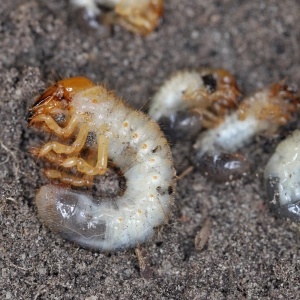
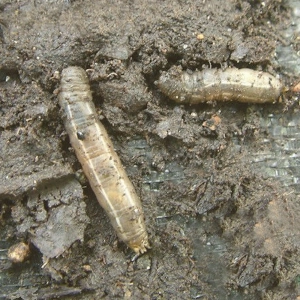
Below the surface, chafer grubs (the curved, white larvae of chafer beetles) and leatherjackets (the grey-brown, legless larvae of the crane fly or ‘daddy long-legs’) are actively feeding. Left unchecked, they can destroy large sections of your lawn before spring arrives.
The Aftermath of Summer Drought: A Double-Edged Sword
Recent prolonged summer droughts alter pest behaviour in key ways:
Hardened soils delay egg-laying: Female crane flies struggle to lay eggs in baked, compact dirt. Once autumn rains arrive, adults lay eggs in concentrated bursts, leading to sudden, localised pest infestations. Note that chafer beetles lay eggs in April/May.
Masked root damage: Lawns already stressed or browned by drought mask early pest damage. When the rain returns and grass fails to green up alongside the rest of the lawn, subterranean feeding can often be the underlying cause.
Thirsty grubs move higher: As upper soil layers rehydrate, hungry young grubs migrate upward toward the root zone. Young grubs are most vulnerable to treatments during this transition. Act swiftly because while moisture will bring them to the surface, cooling soils will push them back down.
What to Watch For
Identifying pest activity early prevents widespread damage. Watch for these key indicators:
Spongy, peeling turf: As grubs sever the root system, the lawn loses its anchor. Sections of turf may feel soft underfoot or roll back easily like a carpet.
Yellowing or straw-like patches: Irregular dead patches that do not revive after autumn rain signal active root loss.
Increased bird and animal activity: Crows, magpies, starlings, badgers, and foxes hunting for protein will tear up turf to reach the grubs beneath. Heavy bird pecking is often the first visible warning sign.
How to Protect Your Lawn
Because traditional chemical lawn insecticides are not available to UK home gardeners, biological controls provide the most effective solution.
Apply Target Nematodes
Microscopic nematodes enter the grubs, release beneficial bacteria, and eliminate the pest naturally without harming children, pets, or wildlife.
- For Chafer Grubs: Use Heterorhabditis bacteriophora. Agrigem offers Chafer Grub Control Nematodes specifically formulated to target these larvae while soil temperatures remain above 12°C.
- For Leatherjackets: Use Steinernema feltiae. Agrigem’s Leatherjacket Control Nematodes provide targeted relief during peak autumn hatching.
Application Tip: Apply nematodes on a cloudy day or in the evening, as UV light degrades them. Water the lawn thoroughly both before and after application to allow the microscopic worms to move through the root zone.
Improve Aeration and Soil Moisture
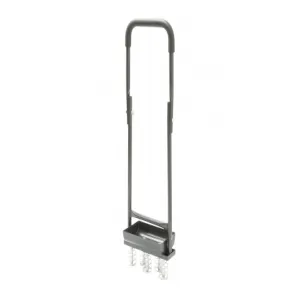
Hard-baked, compacted soil restricts nematode movement. Aerate the lawn with a hollow-tine fork before treating to open up drainage channels and improve penetration. On hydrophobic soils, a wetting agent helps water absorb evenly.
Support Lawn Recovery
After treating the infestation, strengthen the remaining grass to aid recovery before winter. Apply an autumn lawn feed high in potassium and phosphorus to encourage strong root development and overseed bare patches to prevent weed establishment.
Early detection in September and October keeps lawn pests manageable. Treating while the soil is warm and larvae are small protects grass roots and ensures a healthy, green lawn for spring.
This post was written in collaboration with Harry Glenn
Harry Glenn
Harry Glenn is Agrigem’s Technical Account Manager in charge of sports.
Prior to his move to Agrigem, Harry enjoyed a career in business development with, among others, a well-known sports turf contractor. This role exposed him to some of the UK’s most prestigious sporting venues including Cheltenham Racecourse, Wimbledon, Wentworth and Lords - delivering a lifelong appreciation of the benefits of high-quality sports turf.
An experienced Account Manager, Harry has a genuine interest in the sports turf sector and underpins much of his advice and guidance with practical experience at the coalface of turf growing. When not talking about turf, Harry is playing on it, competing at county level golf with a scratch handicap!
Article Notes:
Use plant protection products safely. Always read the label and product information before use. For label and safety information, refer to the manufacturer’s website.
Only certified users may apply professional plant protection products. Find out more about safe use of pesticides here.