A Successful Insect Pest
Box tree moth caterpillar infestations can escalate at incredible speed. Because the moths are strong fliers (adult moths can fly up to 10km a year) and have more than a single lifecycle in a year, a relatively light spotting can turn into a total loss of boxwood hedges in just a week or two.
Sadly, if you see your neighbour has an infestation, it is very likely your plants will be targeted next.
Box moth caterpillars have few natural predators. Birds tend to avoid them because boxwood plants contain alkaloids – naturally occurring toxic compounds – which the caterpillars eat, absorb, and store in their bodies. They therefore taste extremely bitter and can be mildly toxic to predators.
However, recent observations have shown some of our garden birds beginning to eat them, perhaps slowly developing a tolerance for them.
Sadly, for your box hedges however, birds don’t consume enough caterpillar volume to prevent an infestation. A single moth lays hundreds of eggs and a few hungry garden birds cannot keep up with the rapid growth of a colony.
Spotting Signs of an Infestation
Young caterpillars can be very difficult to spot as they are tiny and hide deep inside the dense foliage of the boxwood.
By the time you spot webbing or skeletonised leaves, the infestation will have taken hold. A severe outbreak can contain hundreds of caterpillars on a single medium-sized shrub.
These caterpillars produce thick silken webbing that will eventually drape over the entire plant trapping small dots of black frass (droppings) and dead leaf remains inside it.
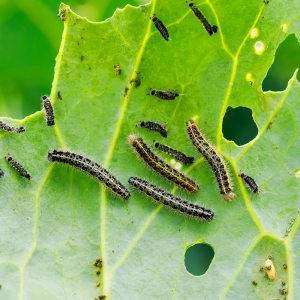
The caterpillars eat the leaves first, often leaving only the central vein. This can leave the plant looking scorched and brown.
Once the leaves are gone, the growing caterpillars move onto the bark of the main stems. This bark stripping cuts off the plant’s flow of nutrients, and it is this particular part of their feeding process that usually kills the plant.

Signs of advanced box moth caterpillar infestation.
Box Moth Lifecycle
The box moth lifecycle typically repeats two to three times a year in the UK, though a warm autumn can lead to a 4th generation.
- Overwintering (late Oct - March): They spend the winter as small, young caterpillars, tucked away in hibernacula - small cocoons made of silk webbing between box leaves. They can survive temperatures as low as -30°C.
- Spring reawakening (March - April): As temperatures rise above 8 – 10°C caterpillars emerge to feed.
- Pupation (May - June): Caterpillars form a chrysalis within the webbing.
- First moth flight (June - July): Adult moths emerge, mate, and lay eggs.
- Second/third generations (July - October): These are often the most damaging, as caterpillar numbers have multiplied.

The Box Moth Lifecycle
Life Cycle Identification
| Stage | Appearance |
| Egg | Tiny, pale yellow, flat discs laid in overlapping ‘sheets’ on the underside of leaves. |
| Caterpillar | Greenish yellow with a shiny black head. As they grow (up to 4cm), they develop thick black and thin white stripes. |
| Pupa | Early-stage pupae are bright lime-green or yellow-ish green. The pupa may retain the dark stripes from its caterpillar phase on its back. It then turns brown or tan, then deep brown just before the moth hatches. You may even see the white wing patterns through the thin pupal skin. |
| Moth | Moths have a wingspan of up to 4cm. Usually white with a thick brown border (the common form) or entirely brown (the ‘melanic’ form seen in up to 15% of the population). |

Box moth eggs
Infestation Prevention and Treatment
Winter
When it comes to managing box moth infestations, timing is everything. Whilst it is easier to begin monitoring in March, if you only have a small hedge, you could start looking for their cocoons in winter.
- Look for two leaves spun together with a tough, dense white silk. This is the cocoon or hibernarium.
- Pinch or prune these leaves out. But bear in mind that this strategy is only effective on small hedges as there can be thousands on larger hedge runs.
- Even if this process isn’t practical, you can thin out the centre of boxwoods in late autumn to improve airflow and light. Moths love dark, stagnant centres and won’t lay in open sections of plant.
- Clear out dead leaves and frass from the base of the stems.

The box moth caterpillar cocoon or hibernarium
Early spring
This is the critical time to act because caterpillars are small and more vulnerable. They haven’t yet reached bark-eating stage, so you still have a chance to save your hedges.
- Once daytime temperatures stay above 10-15°C (usually mid-late March), start inspecting your box hedges.
- Look for small translucent ‘windows’ or parchment-like patches on individual leaves. Young caterpillars can’t yet eat through whole leaves, they just scrape from the underside leaving the upper section of the leaf intact. Check the lower interior leaves first.
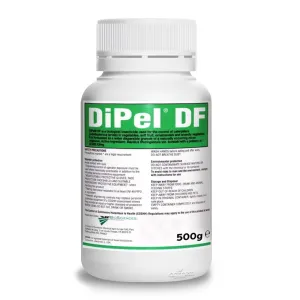
- The most effective product to treat caterpillars at this stage is one that contains bacillus thuringiensis var. kurstaki - like DiPel. Bacillus thuringiensis var. kurstaki is a naturally occurring bacterium. When the caterpillar eats a leaf sprayed with DiPel, the bacteria produce a protein that paralyses their digestive system. They stop eating immediately and die within 2–3 days. It specifically targets caterpillars and won’t harm birds, bees or ladybirds. It is good practice to carry out 2-3 applications of Dipel 10-14 days apart as it does not persist on the leaves for very long. This also coincides with the hatching cycle of the caterpillars. You can use it up to eight times per year.
- You must spray the interior of the hedge, because young caterpillars hide in the middle so a surface spray to the outside of your hedge won’t reach them. Always follow the label instructions. DiPel can be washed off leaves easily and so if it rains after it is applied then it will not be very effective – so keep an eye on the weather forecast.

The Box Moth
Summer
While the spring generation are smaller and slower, the summer generations (typically peaking in July and August) are much larger and hungrier so you need to change your strategy:
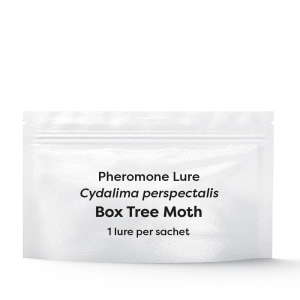
- In July, moths are still flying, so use a pheromone trap to catch the males. If you see a peak in the number of moths in your trap, you will know that a fresh army of caterpillars are likely to hatch in 10-14 days.
- In the summer heat, caterpillars grow large (up to 4cm). Put a white sheet or tray under the hedge and give the branches a vigorous shake or tap. The large caterpillars will drop off, and you can simply tip them into a bucket of soapy water. It’s faster and more satisfying than picking them one by one!
- Many home gardeners use beneficial nematodes (Steinernema carpocapsae). Nematodes are living organisms that need warmth (above 12°C) to work, so they are much more effective in summer than in early spring. Spray them in the late evening or on a cloudy day so they don't dry out or get killed by UV light before they can find the caterpillars.
Autumn
In autumn (September through to October), your goal shifts from saving the leaves to preventing the overwintering generation. This is an important stage because the caterpillars born in late summer/early autumn are the ones that will hide in cocoons and cause the first wave of destruction in March.
- The final generation of caterpillars usually appears in September.
- If the weather is still mild, you can do one final application of DiPel or nematodes. Once the temperature consistently drops below 12°C, biological treatments lose their effectiveness because the caterpillars stop eating and the nematodes go dormant.
- As the days get shorter, the caterpillars start preparing their winter homes. So inspect for webbing - look for those thick, white silk patches that pull leaves together. This is much easier to see in autumn as the rest of the garden starts to thin out.
- If you see localised nests or heavy webbing, prune those sections out. Do not put these in your home compost pile as the caterpillars are surprisingly hardy. Bag them and put them in the bin.
- Clear the frass and dead leaves from the centre of the bush. This removes hiding spots for other pests and allows better airflow for the plant's recovery.
- If you see a massive spike in moths in late September, it’s a warning that they have laid eggs that will hatch into the overwintering larvae. You’ll know to be extra vigilant the following March.
Repairing Damage
Cut out the worst-affected sections to encourage new growth.
Use a high-nitrogen fertiliser or specialised seaweed feed to help the plant recover its energy after defoliation.
Ensure the plant isn't stressed by drought while it's trying to regrow leaves – ensure it receives enough water.
If All Else Fails! Alternatives to Box
Because box tree moths are now endemic in much of the UK, many gardeners are switching to look-alike plants that the moths won't touch:
- Ilex crenata (Japanese Holly)
- Euonymus japonicus 'Microphyllus'
- Lonicera nitida (Box-leaved Honeysuckle)
This guide was written in collaboration with Ollie Wright.
Ollie Wright MBPR, FQA
Ollie Wright serves as the Technical Manager at Agrigem, where he oversees the integrity and accuracy of the company’s technical output. A recognised figure within the UK turf-growing sector, Ollie leads Agrigem’s technical response, ensuring that all guidance provided to retail and trade clients remains rigorous, compliant, and at the forefront of industry standards.
With a career built on a foundation of practical experience in farming and landscaping - including the successful management of his own firm - Ollie bridges the gap between theoretical science and field application. His extensive hands-on background is reinforced by industry credentials, including RHS Horticulture, amenity turf and hard surface BASIS, and FACTS qualifications. This unique combination of expertise allows him to deliver high-level strategic advice across diverse sectors regarding plant protection products and complex legislative requirements.
Article Notes:
- Emerald is a trademark of Agrigem Ltd.
- DiPel is a trademark of Valent BioSciences LLC.
- Pyrethrum is a trademark of Sumitomo Chemical.
- Use plant protection products safely. Always read the label and product information before use. For label and safety information, refer to the manufacturer’s website.
- Only certified users may apply professional plant protection products. Find out more about safe use of pesticides here.