The grazing interval is a critical restriction put in place to ensure that herbicides are given the correct time to work effectively.
Many herbicides, particularly those used for perennial weeds like docks and thistles, are translocated (systemic). This means the chemical must be absorbed by the leaves and moved down into the root system to achieve a complete kill.
Grazing too early can compromise the efficacy of the herbicide. If livestock graze and remove the treated leaf material too soon, the full dose will not reach the roots, allowing the weed to regrow. This incomplete control leads to the costly re-emergence of weeds and the need for repeat applications.
Grazing intervals can range from seven to 14 days and sometimes longer. The actual period will depend on the product, the weed species present (especially poisonous species), and the application method.
Misunderstandings Around Grazing Intervals
Sadly, at the time of writing, there are still several sources online stating that grazing intervals are put in place to stop livestock from consuming, and becoming ill from, herbicide ingestion. This is not the case.
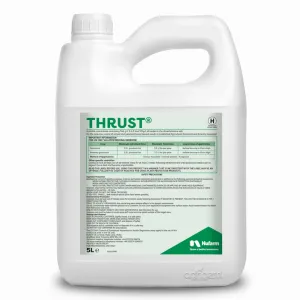
When applied correctly, there is not enough chemical on the leaves of the plant for the herbicide to be harmful. For example, if you applied Thrust at 3.5L/ha, there would be 0.35ml of actual product per m2. An animal would need to eat more plant material than is physically possible long before the chemical could harm them. They would in fact become ill from eating too much before the chemical was an issue.
Paddock managers can have confidence that when herbicides are correctly applied, and grazing intervals adhered to, herbicides will not harm their livestock.
Stay Up to Date
If you’re new to grazing intervals, you might be wondering why we can’t simply give you a chart with comparison tables showing the grazing intervals of all the products we sell.
The reason is that from time to time, grazing intervals – for products with the same active ingredients – can, and do, change.
Although it does not happen very often, there are different reasons why this might happen, including new research, or a change in the product’s authorised use.
So, make sure you check the label with each new application - even if you’ve used the same product on your paddocks and fields in previous years.
All products bought from Agrigem will always contain the very latest grazing intervals on the product label, and any changes are always communicated to our customers.
Follow The Label – it’s a Legal Requirement
Following label instructions is critical and is a legal requirement under several regulations including the Plant Protection Products (Sustainable Use) Regulations 2012. Don’t deviate from these time periods as they’re not general guidance; they are statutory conditions of use.
The label will also tell you if there are any additional restrictions depending on the weed species you aim to treat. For example, ragwort triggers additional guidance due to the impact on palatability of treated plants. This means that the grazing interval might extend beyond that stated for other plants - to a period that allows for it to die off and disappear completely.
The Impacts of Different Active Ingredients
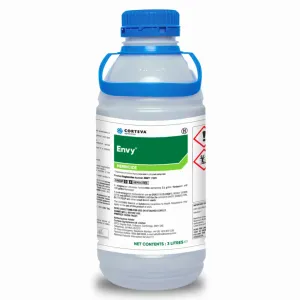
Many selective broad-leaved weed herbicides used on pasture, such as those containing active ingredients like fluroxypyr or clopyralid (often used in products like Grazon or Envy), typically require a minimum of seven days before animals can return.
Products containing triclopyr (often used in products like Grazon) are likely to need a grazing interval of at least seven days but with the same caveat for poisonous weeds.
For targeted application using weed wipers (especially with products containing glyphosate like Roundup), the interval can be shorter. This could be as soon as the leaves are dry if no poisonous weeds are present. But again, always check the product label.
UK Legislation and Best Practice
All users of plant protection products must comply with the terms of the product's authorisation, as detailed on the label. Farmers and paddock managers are encouraged to consult a BASIS-registered agronomist for advice on the most appropriate product, timing, and grazing intervals for their specific situation.
The Voluntary Initiative publish a helpful document - Grassland Weed Control - containing further information relating to grazing intervals.
Our technical team are fully qualified and ready to help you answer any questions you might have regarding grazing intervals.
***
This post was written in collaboration with Ollie Wright.
Ollie Wright MBPR, FQA
Ollie Wright serves as the Technical Manager at Agrigem, where he oversees the integrity and accuracy of the company’s technical output. A recognised figure within the UK turf-growing sector, Ollie leads Agrigem’s technical response, ensuring that all guidance provided to retail and trade clients remains rigorous, compliant, and at the forefront of industry standards.
With a career built on a foundation of practical experience in farming and landscaping - including the successful management of his own firm - Ollie bridges the gap between theoretical science and field application. His extensive hands-on background is reinforced by industry credentials, including RHS Horticulture, amenity turf and hard surface BASIS, and FACTS qualifications. This unique combination of expertise allows him to deliver high-level strategic advice across diverse sectors regarding plant protection products and complex legislative requirements.
Article Notes
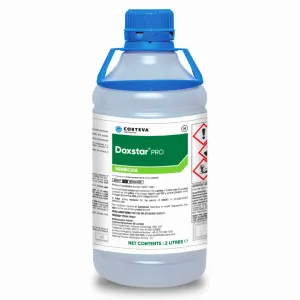
- Please note that grazing intervals can often be different from cutting intervals. For example, Doxstar Pro advises an interval of 28 days before cutting to allow translocation to the roots, but only 7 days as a grazing interval.
- Thrust contains 344 g/l 2,4-D +120g/l dicamba. Thrust is a trademark of Nufarm UK Ltd.
- Grazon Pro contains 240g/L triclopyr and 60g/L clopyralid. Grazon Pro is a trademark of Corteva Agriscience and its affiliated companies.
- Envy contains 100g/L fluroxypyr and 2.5g/L florasulam. Envy is a trademark of Corteva Agriscience and its affiliated companies.
- Roundup Pro Active contains 360g/L glyphosate. Roundup is a trademark of Monsanto Technology LLC.
- Use plant protection products safely. Always read the label and product information before use. For label and safety information, refer to the manufacturer’s website.
- Only certified users may apply professional plant protection products. Find out more about safe use of pesticides here.