The answer, as with most things in lawncare, is it depends. But there is a surprisingly good argument for leaving some leaves on your lawn - provided you manage them properly.
Leaves Aren't Necessarily the Enemy
A fallen leaf is not garden waste. It is a package of organic matter containing nutrients that originally came from the soil and atmosphere. As leaves decompose, fungi, bacteria and other organisms break them down, returning nutrients to the soil and contributing organic matter – all of which support a healthy lawn.
In fact, saprotrophic fungi - the organisms responsible for decomposing dead plant material - are an important part of a healthy soil ecosystem. They help recycle nutrients and support a whole community of organisms further down the food chain.
For the lawn enthusiast however, there is an important distinction between decomposing leaves and a layer of leaves - a few leaves scattered across the turf are very different from several weeks' worth forming a dense, wet mat.
The Case for Mowing Leaves In
Rather than raking every leaf the moment it lands, consider mowing over them.
When leaves are dry and relatively thinly distributed, the mower can chop them into much smaller pieces. Those fragments can settle between the grass blades and decompose, returning nutrients to the soil.
Research increasingly supports this ‘mulching’ approach. Studies recommend regular leaf mulching and note that decomposing leaves can improve soil structure, water infiltration and moisture retention.
There is another useful benefit: you are recycling the leaves where they fell rather than exporting organic matter from your garden.
Don't Let Leaves Smother the Lawn
This is where the aesthetic argument and the agronomic argument conveniently meet!
Grass needs light and air. A thick layer of wet leaves can exclude light, trap moisture and restrict air movement around the grass canopy. In prolonged damp conditions, that is not what you want.
Heavy leaf cover can also create conditions that favour some lawn diseases. Autumn is already a period when damp conditions can encourage problems such as fusarium patch, particularly where turf is lush and nitrogen levels are high.
So the rule shouldn't be ‘never rake’. It should be ‘never allow a thick blanket of leaves to sit on the lawn.
The 50% Rule
A useful practical guide is to keep an eye on how much turf you can still see. Mulching leaves - as described above - until roughly half of the lawn surface is still visible is recommended. Once the leaf layer becomes heavier than that, collect and compost them.
Don't Wait for the Lawn to Disappear.
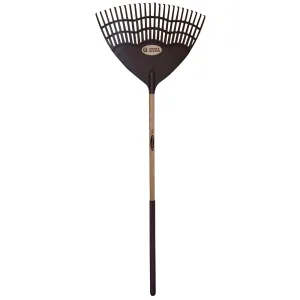
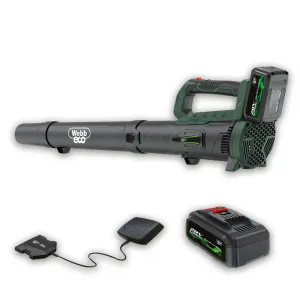
Mow regularly while the leaves are reasonably dry, rather than waiting for every tree to be bare. If the volume becomes too great, rake or blow the surplus away and add it to a compost heap or make leaf mould.
This gives you the best of both worlds: a smart lawn and a useful source of organic matter.
Remember, autumn leaves are not automatically a problem. They're a resource - until there are simply too many of them. Sometimes the smartest thing you can do with an untidy-looking lawn is reach for the mower.
This post was written in collaboration with Ollie Wright.
Ollie Wright MBPR, FQA
Ollie Wright serves as the Technical Manager at Agrigem, where he oversees the integrity and accuracy of the company’s technical output. A recognised figure within the UK turf-growing sector, Ollie leads Agrigem’s technical response, ensuring that all guidance provided to retail and trade clients remains rigorous, compliant, and at the forefront of industry standards.
With a career built on a foundation of practical experience in farming and landscaping - including the successful management of his own firm - Ollie bridges the gap between theoretical science and field application. His extensive hands-on background is reinforced by industry credentials, including RHS Horticulture, amenity turf and hard surface BASIS, and FACTS qualifications. This unique combination of expertise allows him to deliver high-level strategic advice across diverse sectors regarding plant protection products and complex legislative requirements.