Despite grass being one of the most evolutionary successful and populous plant groups on earth (dominating ecosystems like prairies and savannas), the grass in our lawns is cultivated turfgrass – and not the same tough, dominant species as its wild grass cousin.
Weeds are, by comparison, highly adaptable and opportunistic - so while turfgrass has been selectively bred for specific qualities (colour, blade width, light tolerance and so on) it is this fine breeding and cultivation that compromise its natural survival skills.
The Survival Strategies of Weeds
Side-by-side, weeds simply have more weapons in the armoury; benefiting from superior root systems, prolific seed production, climate adaptation features, and a greater tolerance to soil conditions.
Many common annual lawn weeds have short, fast lifecycles where they grow quickly, produce seeds and die off – maximising their ability to reproduce before being mown or removed.
The deep tap roots of perennial weeds like dandelion and thistle store a lot of energy that allows them to:
- Sprout quickly in spring,
- Access water and nutrients deeper in the earth (making them well-adapted to drought),
- Regrow – even if the leaves are removed.
In addition, many weeds are native to the local environment in which they flourish, meaning they can be very well adapted to the soil conditions and local climate.
Imagine dry or drought conditions where there has been no rain for weeks – an increasingly common summer scenario for UK gardeners. When the soil dries out and hardens, your turfgrass roots are not long enough to reach deeper reserves of water. Inevitably this means your grass starts to turn brown and crisp.
In this scenario, your lawn is very stressed, and the grass is weak. Don’t panic though, it may look dead but is more likely to be dormant and will start to green up again within seven to 14 days following the return of rain.
However, during this period of stress, many weed species - like plantain and thistle for example – can easily move in. They can tolerate and even thrive in hard, dry, compacted soil. In this situation they can easily take up space ceded by your thinning weakened grass.
In the battle for survival, weeds also have the edge when it comes to seed production. They produce vast numbers of seeds that can remain in the soil, dormant – but viable – for years, just waiting for the right conditions in order to germinate.
The way they disperse seeds also benefits them; a gentle puff of wind on a dandelion seed head, or an interaction with curious wildlife, will see seeds travel great distances.
Weeds Versus Turfgrass - The Key Differences
| Feature | Cultivated Turfgrass | Wild Weeds |
| Root System | A relatively shallow root system can leave grass vulnerable to drought and nutrient scavenging. | Deep taproots (like those of the dandelion) or aggresive rhizomes (couch grass or creeping weeds) help weeds to store energy and find resources deeper in the soil. |
| Energy Allocation | Energy is focussed on leaf blade production to give you a lush and dense green carpet. | Energy is focussed on seed production and storage, maximising reproduction and energy reserves needed for survival. |
| Uniformity | Turfgrass in a lawn is a monoculture - usually just one, or very few, cultivars. This can make the entire lawn vulnerable to a single stress factor or disease. | Weeds are biodiverse - the range of different species is adapted to various environmental stresses, so the odds are with them - something will survive. |
| Mowing Tolerance | Grass obviously tolerates mowing, but constant short mowing stresses the grass, exhausting its stored energy and weakening it over time. | Many weeds (like Poa annua for example), have evolved to flower and set seed below the typical height of a mower blade - perfectly adapting itself to a typical mowing regime. |
Helping Turfgrass to Perform Better
All things being equal then, turfgrass is a poor competitor to most lawn weeds. However, the good news is, there is much that can be done to boost its ability to outperform and crowd out weeds – preventing them from getting hold in the first place.
Nutrition
Ensuring your grass has the correct nutrition, when it needs it, is one of the most important methods of boosting its strength and vitality.
- Start by conducting a soil test to determine any missing nutrients in the soil or if the pH is not favourable to turf growth. This prevents wasted effort and ensures you are feeding the grass only what it needs to thrive.
- Grass needs nitrogen to grow green and thick, so apply a fertiliser containing a decent amount of nitrogen during its peak growing season (usually spring and autumn) to help fuel is growth.
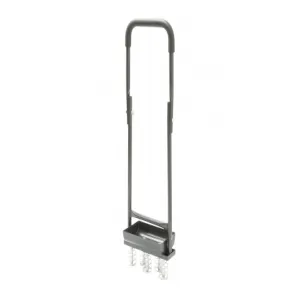
- Make sure you aerate your lawn soil to relieve any soil compaction. This will help admit water, oxygen and other nutrients to penetrate the root zone. Deep aeration can also promote the grass to put down deeper roots meaning it will survive longer into a drought in the same as a weed with a deep tap root. This is a critical process for grass but detrimental to compaction-loving weeds like plantain.
- Finally, overseed any thin areas to improve your lawn’s density and prevent weed seeds from germinating in bare soil patches. The best time to overseed is following aeration.
Mowing
Good mowing technique will pay dividends in improving the health of your turfgrass and boosting its ability to crowd-out weeds.
- Raise your mower height! Cutting grass too short is the quickest way to weaken it. Taller grass blades create more food for the roots and generate shade for the soil which can help deprive weed seeds of the light they need to germinate.
- Never remove more than one third of the grass blade in a single mowing session. Removing too much will deplete its energy reserves and make it vulnerable to weeds, and disease. Keep your mower blades sharp, as ragged ‘ripped’ brown tips can also expose the grass to disease.
- Finally, mowing often but taking a little off the top encourages grass to produce more tillers (new shoots from the crown) which helps generate a denser, thicker turf to crowd out weed competitors.
- Ideal mowing heights 30-40mm in spring, coming up to 50mm if drought begins in the summer and then going back down to 35mm-25mm in the autumn and maintaining it at 25mm through the winter. Bring it back up in the spring to 30-40mm again. This is for a general purpose lawn that you want to look nice but is used by family and pets. An ornamental lawn will probably be lower than these heights in spring and summer.
Watering
When it comes to watering, the key is to water deeply, but infrequently.
- In dry conditions, aim for about 2.5cm (1 inch) of water per week, applied in one or two sessions. This forces the grass roots to grow deep into the soil making it more resilient to drought.
- Avoid shallow watering because it only encourages shallow roots, and these will be the first to suffer during dry spells. A damp top surface also encourages weed seeds to germinate.
- Finally, pick your time! Watering before 10am can help minimise water loss to evaporation and allows the grass blades to dry out before evening reducing the risk of fungal diseases.
Direct Weed Control
It is crucial to try and prevent weeds from setting seed, so when targeting weeds that have already established themselves, try and remove them when they are actively growing, but before they have flowered / set seed.
- Use a weeding tool or manually pull perennial weeds with deep tap roots (like dandelions) ensuring you get the entire root out.
- Choose a high-quality selective herbicide, like Dicophar to treat heavy or wide-spread weed growth. These herbicides only target dicot plants (those with broad leaves) and will not impact your lawn grass. Find out more about how selective weedkillers work here.
Focus on these practices and you will soon create a dense, self-sustaining lawn that will see off competition from weeds!
For advice on lawncare generally, or to discuss a specific herbicide, please get in touch with the technical team here at Agrigem - for free, professional guidance.