Maintaining a pristine patio can be a challenge, especially when weeds start to creep in. If you’ve ever spent hours hand-weeding between patio stones, it can be frustrating to see them pop up again, sometimes just too small to grab and pull out.
Why Weeds Succeed on Patios
Typically, weeds find their way through cracks in the paving stones or the small joints between them. These tiny spaces are surprisingly fertile ground.
Most pioneer species (weeds that show up first) have evolved to survive in harsh environments. They don’t need a nicely prepared bed to germinate and flourish, they only require a small dusting of debris, decomposing leaves and sand (often used to fill the spaces between patio slabs) - as well as moisture.
The gaps between stones act like little reservoirs – rainwater runs off the stones and concentrates in the cracks, keeping that tiny bit of soil more humid than the surface.
Patio slabs absorb heat during the day which helps warm that small amount of soil, adding to the mini greenhouse effect. This extra warmth and humidity create the perfect conditions for germination!
Many patio weeds (like dandelions) are taproot experts. Once they germinate in that top few millimetres of soil, they send a long, thin root straight down into the subbase or the actual earth beneath the patio.
Common Types of Patio Weeds
- Dandelions: Parachute seeds that find every tiny crevice then grow well with a long tap root.
- Herb Robert: Can grow in almost pure gravel or stone dust.
- Grasses: Various species can sprout from seeds carried by the wind – particularly annual meadow grass which has a tough creeping root system.
- Moss: Doesn’t need soil, just shade and moisture.
- Buddleia: Loves the high pH of mortar. Its seeds are tiny and wind-blown, landing perfectly in thin gaps. Buddleia grows very well without a lot of soil as it has a long woody taproot – often damaging masonry and walls.
- Oxford ragwort: Historically spreads via the clinker on railway tracks, it thrives in the dry gritty gaps between paving and uses a long taproot to gain a strong hold.
- Hairy bittercress: Known for its ‘exploding’ seed pods. If you touch a mature one, it will fire dozens of seeds into every available crack within a one-meter radius.
- Mexican fleabane: Often planted intentionally, it self-seeds aggressively in cracks and produces masses of small white and pink daisies, requiring almost no soil.
- Pellitory-of-the-wall: A ruffled green plant that specifically seeks out old mortar in old walls and paving.
Getting Rid of Patio Weeds
Some shallower-rooted patio weeds will be easy to pull up by hand. Don a pair of gardening gloves, grab and pull them out, taking care to pull the entire root out. This is easier if the weeds are larger and there is a bit of moisture in the ground, so aim to do this after rain if you can.
You may need to use a patio-scraper tool to ‘hook’ the root out with the weed. Take care not to just cut the leaves off and leave the roots behind as many of these patio weeds will simply grow again. It can be tempting to run along the cracks with a knife or hoe, but unless you get that root out, you are simply pruning them!
Chemical Weed Killers
Where you have deep-rooted weeds, very small weeds, or where you’ve found it impossible to remove weeds without leaving the roots behind, you might consider a chemical weedkiller.
Glyphosate-Based Products
Glyphosate is a widely used herbicide known for its effectiveness in killing broadleaf weeds and grasses down to the root. It's non-selective, so it will kill any plant it encounters.
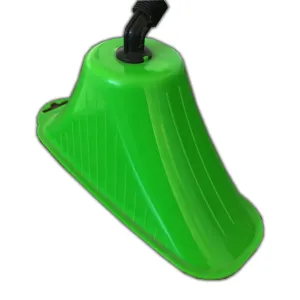
For this reason, always take care when using total weed killers to avoid drift onto non-target plants or lawns as they will kill these too. Consider using a spray hood to control your spray.
Products include:
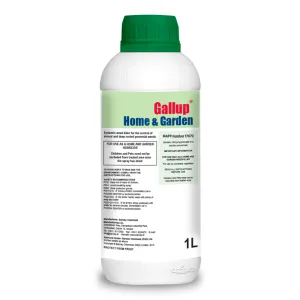
- Gallup Home and Garden - (can be used by amateurs)
- Gallup Biograde - contains 360g/L glyphosate.
Non-glyphosate Weed Killers
Non-glyphosate weed killers are formulated to minimise environmental impact and can align with sustainable practices.
However, they are also considered total weedkillers – killing any plant they come into contact with. So, as with glyphosate weedkillers, take care to avoid spray drift onto non-target plants.
Products include:
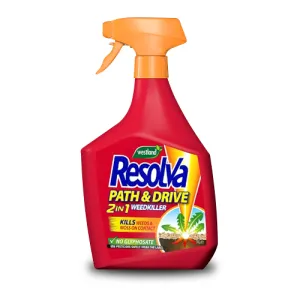
- Resolva Path and Drive contains acetic acid as its active ingredient. It can be used all year round and will treat most annual and perennial weeds and moss.
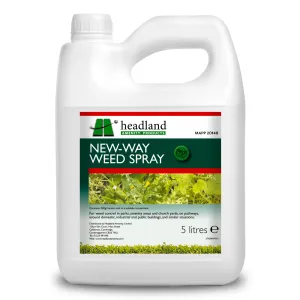
- New Way Weed Spray also contains acetic acid and is formulated to quickly tackle weeds and grasses on hard surfaces.
Patio Maintenance Tips for Weed Prevention

Preventing weeds in patios is often more manageable than dealing with them after they appear. Here are some tips to keep your patio weed-free:
Regular Cleaning
Keep your patio clean and free of debris to reduce the likelihood of weeds taking root. Sweep away leaves, dirt, and other organic material that can provide a suitable environment for weed growth.
Seal Cracks and Joints
Seal cracks between slabs or stones to prevent weeds from finding a foothold. Use a good quality sand, sealant or patio filler to fill gaps and maintain a smooth surface.
Use Landscape Fabric
Placing landscape fabric under the patio stones before they are laid can serve as a barrier, preventing weeds from growing through the surface.
Environment Management
Check which weeds you have growing in your patio. If you are nurturing a buddleia in a border for example, you are very likely to see buddleia ‘weeds’ pop up in your patio. Cut it back after it flowers before those seeds inevitably make their way to your patio.
Perhaps you have wall flowers growing nearby; take a moment to assess the environment and prune as required to minimise seed distribution.
This guide was written in collaboration with Ollie Wright.
Ollie Wright MBPR, FQA
Ollie Wright serves as the Technical Manager at Agrigem, where he oversees the integrity and accuracy of the company’s technical output. A recognised figure within the UK turf-growing sector, Ollie leads Agrigem’s technical response, ensuring that all guidance provided to retail and trade clients remains rigorous, compliant, and at the forefront of industry standards.
With a career built on a foundation of practical experience in farming and landscaping - including the successful management of his own firm - Ollie bridges the gap between theoretical science and field application. His extensive hands-on background is reinforced by industry credentials, including RHS Horticulture, amenity turf and hard surface BASIS, and FACTS qualifications. This unique combination of expertise allows him to deliver high-level strategic advice across diverse sectors regarding plant protection products and complex legislative requirements.
Article Notes:
- Gallup Biograde is a trademark of Barclay Chemicals Manufacturing Ltd. It contains 360g/L glyphosate.
- Gallup Home and Garden is a trademark of Barclay Chemicals Manufacturing Ltd. It contains 360g/L glyphosate.
- Resolva Path and Drive is a trademark of Westland Horticulture Ltd. It contains 60g/L acetic acid.
- New Way Weed Spray is a trademark of Headland Amenity Products. It contains 240g/L acetic acid.
- Use plant protection products safely. Always read the label and product information before use. For label and safety information, refer to the manufacturer’s website.
- Only certified users may apply professional plant protection products. Find out more about safe use of pesticides here.