Please note, this blog was written in relation to weather conditions during June 2026.
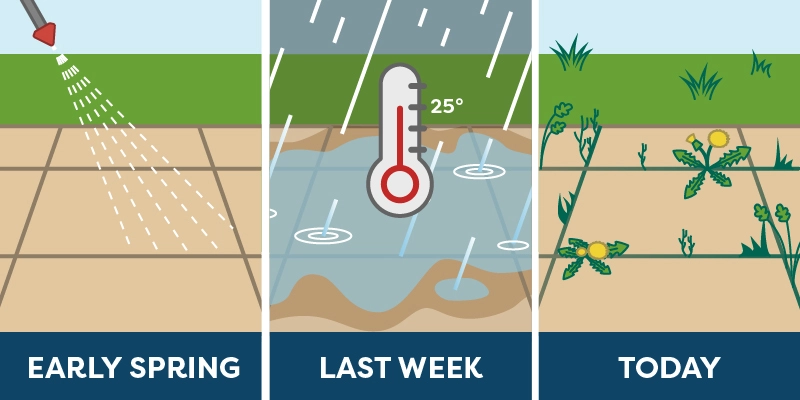
Rain + Warmth = Germination
Soil is extremely good at holding viable weed seeds. Millions of dormant seeds from years gone by sit just beneath the surface, waiting for the perfect environmental cues to wake up.
When you sprayed earlier in the season, you cleared the existing competition. Then, last week's rain thoroughly soaked the ground, finding its way into cracks and crevices, and this week's warmth acted like an incubator.
The reality is, you’re dealing with a new batch of seedlings that have freshly germinated in ideal conditions.
The One-Inch Rule
When it comes to using systemic weedkillers like glyphosate, size matters. A lot.
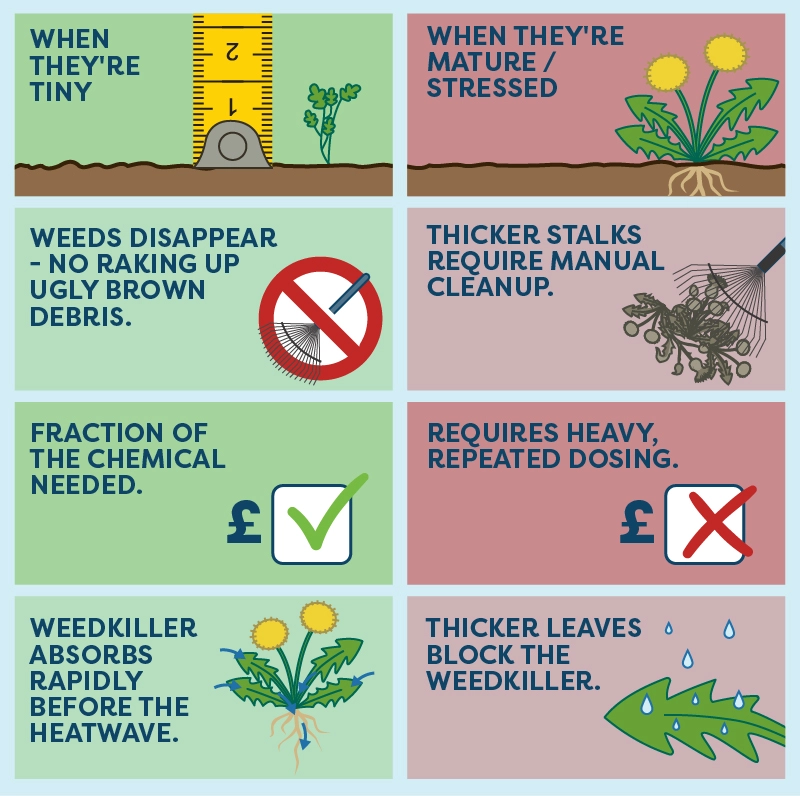
Heading out with the sprayer while the weeds are tiny (less than an inch tall) makes a huge difference when treating weeds. Don’t leave them to grow any bigger. Here’s why:
They Disappear Faster
- Tiny, immature weeds have very little root structure and thin leaf cuticles. When sprayed at this micro-stage, they absorb the treatment quickly, die off completely, and essentially dissolve into the soil much quicker. You won’t even have to rake up the ugly, brown desiccated leaves because they simply disappear.
You Use Less Product
- Targeting weeds while they are tiny requires a fraction of the chemical spray compared to tackling a fully grown, waist-high jungle. It’s much more efficient and economical.
You’ll Beat the Heatwave
- The forecast is showing hotter weather on the horizon. Plants protect themselves during a heatwave by slowing down their metabolism and thickening their leaves to prevent water loss. If you wait until it’s scorching hot and the weeds are mature, they will become stressed, and stressed weeds do not absorb weedkiller effectively, leading to poor results.
Your Action Plan for The Weekend
Don't let a quick job turn into a weekend-long battle later this summer. Take advantage of the current active growth phase before the heatwave locks them down.
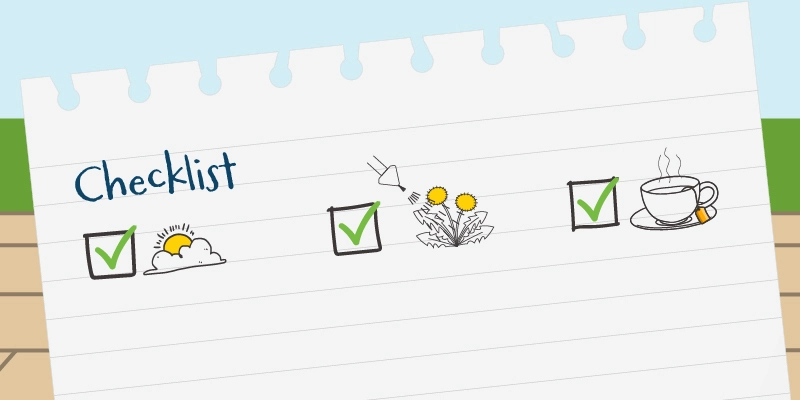
Pick a calm, dry morning
- Spraying on a still morning ensures the mist won't drift onto garden plants.
Target the tiny stuff
- Focus on gravel driveways, patio cracks, fence and wall lines where fresh green weed growth is starting to show.
Let the glyphosate do the work
Once sprayed, leave the area alone. Because the weeds are so small, you’ll soon have a clean slate again.
Remember!
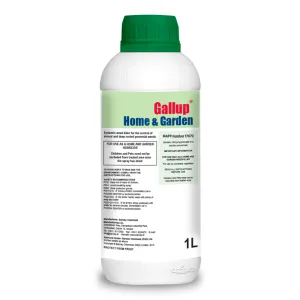
Gallup Home & Garden glyphosate weedkiller is one of very few industrial strength glyphosate herbicides approved for amateur use. In other words, you do not need to be professionally trained to use it; just make sure you follow the label instructions.
Glyphosate is a total weedkiller, meaning it will kill any plant it comes into contact with, so take care when spraying to avoid drift onto non-target plants.
This guide was written in collaboration with Ollie Wright.
Ollie Wright MBPR, FQA
Ollie Wright serves as the Technical Manager at Agrigem, where he oversees the integrity and accuracy of the company’s technical output. A recognised figure within the UK turf-growing sector, Ollie leads Agrigem’s technical response, ensuring that all guidance provided to retail and trade clients remains rigorous, compliant, and at the forefront of industry standards.
With a career built on a foundation of practical experience in farming and landscaping - including the successful management of his own firm - Ollie bridges the gap between theoretical science and field application. His extensive hands-on background is reinforced by industry credentials, including RHS Horticulture, amenity turf and hard surface BASIS, and FACTS qualifications. This unique combination of expertise allows him to deliver high-level strategic advice across diverse sectors regarding plant protection products and complex legislative requirements.
Article Notes:
- Gallup Home & Garden is a trademark of Barclay Chemicals (R&D) Ltd.
- Use plant protection products safely. Always read the label and product information before use. For label and safety information, refer to the manufacturer’s website.
- Only certified users may apply professional plant protection products. Find out more about safe use of pesticides here.