Wildflower meadows – big and small – usually come into bloom in late spring / summer – between May and September.
Seeds can be sown in spring or in autumn (but always check the packet for information specific to the blend). Sowing perennial seeds in autumn gives the roots an opportunity to establish - in still-warm soil - prior to the arrival of frosts. This means the plants get a bit of a head start come spring.
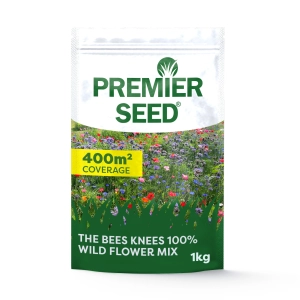
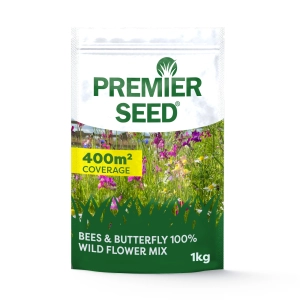
Here at Agrigem, we stock a large range of wildflower blends including mixes specially formulated to attract pollinators, specialist blends for sandy or heavy soils, and a variety of mixes formulated for different locations such as water margins or woodland.
One of the simplest ways you can create a wildflower patch in your garden is to sacrifice a section of your lawn – should you have one!
No area is too small for a wildflower patch, but to benefit from colour and species variety, we recommend you try and create a one square metre or one metre diameter patch at a minimum.
Here’s how to get going with a mini wildflower meadow:
Prep Your Plot
Wildflowers thrive in poor, low-nutrient soil. Rich garden soil encourages green growth, grasses and weeds, which will quickly crowd out delicate native blooms. So don’t be tempted to feed the soil or enrich it in any way.
If using a section of lawn, cut your desired shape using a sharp tool. Remove all existing turf, roots, and weeds. Whilst some people will sow directly onto a grass lawn, this is rarely successful as the existing grass is likely to smother any new wildflower seedlings. For a mini meadow, we recommend starting with bare soil.
If you are creating a dedicated bed, the principles are the same when it comes to preparing the soil:
If you think your soil is particularly fertile, scrape away the top 2–3 inches of topsoil or mix in horticultural sand to ‘lean’ it out.
Create a fine tilth - rake the bare soil until it has a fine, crumbly texture, then walk over it gently to slightly firm up the soil.
Choose Your Preferred Wildflower Blend
For smaller spaces, selecting the right seed mix makes all the difference:
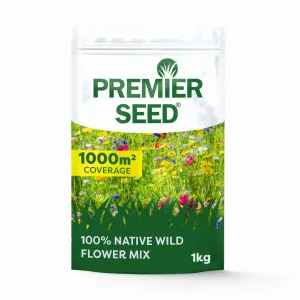
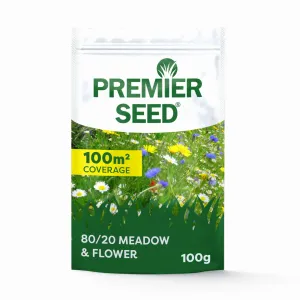
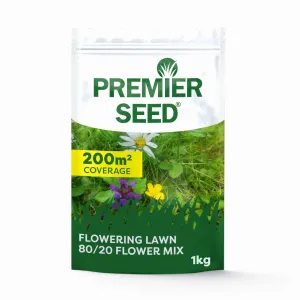
- If you are starting with a bare patch of soil, try an 80/20 mix. The grass species are selected to be slower growing and won’t outcompete the wildflowers. Alternatively, you could select a 100% pure wildflower seed mix.
- Annuals vs. Perennials:
- Annuals (e.g., cornflower, poppy, corn marigold) give an immediate explosion of vibrant colour in year one.
- Perennials (e.g., oxeye daisy, red campion, meadow cranesbill) take a year to establish but come back season after season.
If you want instant year-one impact and long-term sustainability, use a blend of annual and perennial seeds. Our Wildflower Pollinators mix contains a blend of annual, biennial and perennial seeds in a smaller 50g box. This size will sow an area of up to 10m2.
Get Set, Sow!
Sowing wildflower seeds evenly in a small area can be tricky. Here is how to get uniform coverage:
- Mix with sand: Combine your seeds with clean silver sand or dry horticultural sand (roughly 4 parts sand to 1 part seed). This gives you a visual guide of where you’ve scattered seeds and prevents over-sowing.
- Broadcast: If you went for a slightly larger patch, sow half the mix walking lengthways, and the other half walking crossways. Aim for a rate of roughly 2g to 3g of seed per square meter.
- Lightly rake the seeds into the soil to ensure good seed-to-soil contact. Do not bury the seeds - they will need light to germinate.
- Water the area using a fine mist to avoid disturbing the seeds, then net the patch if needed to prevent birds from stealing the seeds.
- Keep up a light watering regime for two weeks (if there is no rain) – until you see full germination. Once they have fully germinated, reduce your watering to just a few times a week, but extend the watering time to ensure moisture reaches new roots.
Simple Year-Round Maintenance
| Season | Maintenance Task |
| Spring |
|
| Summer |
|
| Late Autumn |
|
This post was written in collaboration with Ollie Wright.
Ollie Wright MBPR, FQA
Ollie Wright serves as the Technical Manager at Agrigem, where he oversees the integrity and accuracy of the company’s technical output. A recognised figure within the UK turf-growing sector, Ollie leads Agrigem’s technical response, ensuring that all guidance provided to retail and trade clients remains rigorous, compliant, and at the forefront of industry standards.
With a career built on a foundation of practical experience in farming and landscaping - including the successful management of his own firm - Ollie bridges the gap between theoretical science and field application. His extensive hands-on background is reinforced by industry credentials, including RHS Horticulture, amenity turf and hard surface BASIS, and FACTS qualifications. This unique combination of expertise allows him to deliver high-level strategic advice across diverse sectors regarding plant protection products and complex legislative requirements.
Article Notes:
- Use plant protection products safely. Always read the label and product information before use. For label and safety information, refer to the manufacturer’s website.
- Only certified users may apply professional plant protection products. Find out more about safe use of pesticides here.