What Are Invasive Plants and How Did They Arrive?
An Invasive Non-Native Plant (or Invasive Alien Species) is a plant that:
- Is non-native (introduced outside its natural range).
- Was introduced by human activity (deliberately or accidentally).
- Has a negative impact on the environment, economy, or health.
There are more than 70 invasive non-native plants (INNS) covered by regulation in the UK. They often spread rapidly because they lack the herbivores, insects, pathogens, or diseases that kept them in check in their native lands. This means they spend less energy on defence and more on growth.
Improper disposal of cuttings, roots or seeds can also help these invading plants to establish new populations. Most invasive plants arrived in the UK through human activity, primarily:
- Horticulture (deliberate Introduction): Many of the most problematic species, such as Japanese knotweed, giant hogweed, and Rhododendron, were intentionally brought to the UK in the 19th and early 20th centuries as desirable ornamental plants for grand estates and gardens.
- Trade and transport (accidental introduction): Species can hitch a ride in shipping containers, on imported goods, or in the ballast water of ships.
- Accidental escape/dumping: Species often escape from gardens or ponds due to improper disposal (e.g., throwing garden waste or pond plants into the wild).
Damage Caused by Invasive Plants
The harm caused by INNS is extensive and covers multiple sectors:
| Area of impact | Description of damage | Examples of plants |
| Environmental | Biodiversity loss: They outcompete native species for light, water and nutrients, forming dense monocultures that destroy diverse habitats. | Rhododendron (shades out ground flora), Himalayan balsam (outcompetes native annuals). |
| Environmental | Erosion: Species like Japanese knotweed and Himalayan balsam die back completely in winter, leaving riverbanks bare and vulnerable to erosion. | Japanese knotweed, Himalayan balsam. |
| Economic | Structural damage: Aggressive roots / rhizomes can damage foundations, walls, drains, and paved areas, leading to huge repair and treatment costs. | Japanese knotweed (causes property value loss). |
| Economic | Control costs: INNS cost the UK economy an estimated £1.7 billion per year in control efforts and damage repair. | All major invasive plants. |
| Human Health | Some plants pose direct health risks upon contact. | Giant hogweed (sap causes severe long-lasting burns, blistering and photosensitivity). |
Common Invasive Plants and Their Habitats
The most common INNS tend to be specialists, dominating specific environments:
| Invasive Species | Primary Habitat | Location | Spread Mechanism |
| Japanese knotweed (Fallopia japonica) | All land types | Riverbanks, urban areas, gardens, brownfield sites, railway embankments. | Tiny fragment of underground rhizome or stem. |
| Himalayan balsam (Impatiens glandulifera) | Waterways/Moist areas | Riverbanks, stream sides, damp woodland, gardens. | Explosive seed pods scatter seeds up to 7m. |
| Giant hogweed (Heracleum mantegazzianum) | Waterways/Waste ground | Riverbanks, roadside verges, neglected land, parks. | Massive quantities of seed dispersed by wind and water. |
| Rhododendron (Rhododendron ponticum) | Woodlands/Gardens | Ancient woodland, acid heathland, large gardens, parkland. | Prolific, wind-blown seed and suckers. |
| Floating Pennywort (Hydrocotyle ranunculoides) | Waterways/Ponds | Rivers, canals, lakes, ornamental ponds. | Rapid growth and fragmentation of stems/leaves. |
| New Zealand Pigmyweed (Crassula helmsii) | Aquatic | Ponds, ditches, slow-moving water, wet ground. | Tiny fragment of stem/leaf. |
Legal Responsibility for Invasive Plants (UK Law)
The primary legislation governing invasive plants in the UK is the Wildlife and Countryside Act 1981 (WCA), particularly Schedule 9.
- Section 14 of the WCA makes it an offence to plant or otherwise “cause to grow in the wild” any plant listed on Schedule 9 (which includes Japanese knotweed, giant hogweed, and Himalayan balsam). This means you must not intentionally allow the plant to escape or spread from your land.
- As a homeowner or landowner, you are responsible for preventing invasive non-native plants on your land from spreading onto other property (including neighbours’ gardens or public land/waterways) and causing a nuisance. Failing to prevent spread, especially that which causes damage to a neighbour's property, can result in civil legal action (a nuisance claim) being taken against you.
- Controlled Waste: Plant material and soil contaminated with species like Japanese knotweed are classified as Controlled Waste. This means they must be disposed of at a licensed landfill site with a specific permit or treated/buried on-site according to strict legal guidelines. You cannot put them in household waste or council green bins.

Legal Precedent
While just having an invasive species on your land is not a criminal offence, allowing it to spread or failing to manage it where it poses a risk to a neighbouring property or the wild is a legal liability.
In effect this means you could become the victim of a civil case if the species spreads from your property onto another private property, public land, road, or park - for example.
In these instances, it is likely that the cost of eradicating the species, plus any property remediation costs and legal fees could be recovered from you in a court of law.
In addition, you could be levied with a fine plus a prison sentence, the length of which is determined by the severity of the issue.
The key takeaway is that for these species, it is a criminal offence to allow INNS to spread / fail to manage them or otherwise cause them to grow in the wild.
What to Do If You Find an Invasive Plant Species
If you discover a potentially invasive plant on your land, your action will be determined by the species:
| Species found | Action required | Key considerations |
| Japanese knotweed | Talk to our qualified agronomists for advice. This species is notoriously difficult to eradicate, and its waste is controlled. DIY removal is strongly discouraged due to the high risk of spreading tiny rhizome fragments. | Professionals are required for mortgage surveys and typically issue an insurance-backed treatment plan. |
| Giant hogweed | Talk to our qualified agronomists for advice. Treat with extreme caution. Do not touch the plant without heavy-duty protective clothing (long sleeves, trousers, goggles, gloves) due to its poisonous sap. | Treatment usually involves herbicide application or careful cutting/excavation, followed by safe, licensed disposal of all material. |
| Himalayan balsam | Can often be tackled yourself (if small) with a targeted glyphosate herbicide. Some control can be achieved by pulling or cutting before the seed pods mature (typically late June). If cut, you may get a second flush come through in September which will try to flower and seed and so will need cutting again to prevent this. | The pulled plant material must be composted on-site. |
| Aquatic species | Talk to our qualified agronomists for advice. Strict controls surround the use of herbicides in water. Consult our guide here. | Permission must be sought form the Environment Agency before treating aquatic weed species. |
Identifying INNS
Use reliable sources (like the Non-Native Species Secretariat - NNSS) to confirm the identity of the plant. Below is a concise list of the most well-known and problematic invasive plant species that are listed on Schedule 9 in England and Wales (WCA 1981, Part II). These are the species that pose the most significant threat and are the most frequently encountered by the public:
| Common name | Scientific name | Primary concern |
| Japanese knotweed | Fallopia japonica | Structural damage to property, rapid spread via rhizomes. |
| Giant knotweed | Fallopia sachalinensis | Larger than Japanese knotweed, causes erosion and property damage. |
| Hybrid knotweed | Fallopia x bohemica | A cross between the two, often vigorous and common. |
| Giant hogweed | Heracleum mantegazzianum | Direct threat to human health (causes severe burns). |
| Himalayan balsam | Impatiens glandulifera | Rapid spread via explosive seeds, causes riverbank erosion. |
| Rhododendron | Rhododendron ponticum | Forms dense shade, killing native woodland flora. |
| New Zealand pigmyweed | Crassula helmsii | Highly invasive aquatic plant, suffocates ponds and waterways. |
| Floating pennywort | Hydrocotyle ranunculoides | Extremely fast-growing aquatic plant, blocks waterways and crowds out native life. |
| Water fern | Azolla filiculoides | Forms dense mats on water surfaces, blocking light and oxygen. |
| Giant rhubarb | Gunnera tinctoria | Large-leaved plant that aggressively displaces native vegetation in wet areas. |
| Montbretia | Crocosmia x crocosmiiflora | Spreads rapidly via corms, forming dense patches that outcompete native plants. |
| Cotoneaster (Various Species) | e.g., C. horizontalis, C. simonsii | Berries are spread widely by birds, dominating scrub and rocky habitats. |
| Few-flowered Leek | Allium paradoxum | Forms dense ground cover in woodlands, outcompeting early native flowers. |

General Notes on Managing INNS
- Containment: Take immediate action to stop it from spreading, especially across your boundary or into watercourses.
- Control: Implement a management plan, which usually involves professional herbicide treatment over several seasons or carefully controlled excavation and disposal.
- Reporting (optional but recommended): You do not have a legal obligation to report most invasive species on private land, but reporting significant finds to groups like the NNSS or your local council can help in national tracking and coordinated regional efforts.
- Check the species: Many of the most aggressive aquatic and semi-aquatic species (e.g., water fern, floating pennywort, and several species of water primrose) are also subject to the INNS (Enforcement and Permitting) Order 2019, which prohibits their sale, cultivation, and keeping.
- Consult the law: The specific and authoritative legal text can be found on the government's legislation website, though it is often detailed and frequently amended. You can search the Schedule 9, Part II of the Wildlife and Countryside Act 1981 for the most up-to-date statutory wording.
Control Methods
You are not completely powerless as a non-professional homeowner; there are indeed a few processed you can try without professional assistance.
Cutting
Cutting and pulling Himalayan balsam is the easiest and most environmentally friendly method of control and if done regularly over a three-to-four-year period, you can eliminate it completely.
Spraying
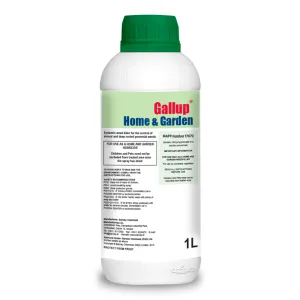
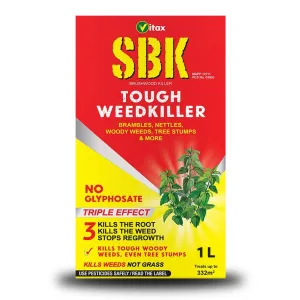
Agrigem agronomists can recommend Gallup Home and Garden and SBK. Both these products are effective for controlling most of the weeds listed in this guide except for any of the aquatic weeds growing in water or on land immediately adjacent to aquatic areas. Consult our short guide for information on aquatic weed control.
These products can both be applied as a foliar spray to the leaves (giant hogweed) or as a cut stump application once the plant has been cut down (rhododendron).
Gallup Home and Garden can be injected into the stems of the growing plants (giant hogweed, Japanese knotweed) and can also be used as a stem fill product for treating Japanese knotweed. This is where the stems are cut and left where they fall, and the stem is then filled with neat Gallup Home and Garden.
Professionals Only
The following processes need to be undertaken by a qualified professional:
Professional Plant Protection Products
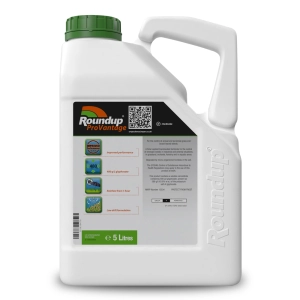
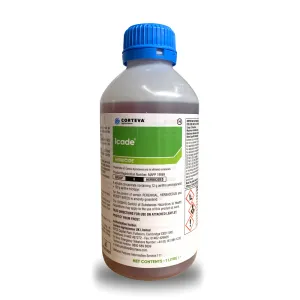
Professional plant protection products can only be applied by a qualified professional. Agrigem stocks a variety of professional-use products, the best of which are:
- Roundup Pro Vantage
- Icade
- Synero
- Eco Plugs depending on the weed and the situations.
Soil Sterilisation
Soil sterilisation is a process used to eradicate invasive plant propagules (seeds, rhizomes, roots etc.) from the soil. This process primarily works by applying intense heat to the soil which is lethal to the propagules.
Soil sterilisation kills the plant seeds in the surrounding soil, preventing them from germinating, and the rhizomes of plants like Japanese knotweed – the primary means of spread for perennial invasive plants.
Finding invasive plant species on your property can cause anxiety and concern. But with professional advice, the right approach and quick action, most cases are easily resolved. Talk to our technical team today if you have any questions relating to invasive plant species.