Before we dig into the lifecycles of leatherjackets and chafer grubs, here’s a quick reminder of their key differences:
| Feature | Leatherjacket | Chafer Grub |
| Adult form | Crane fly (daddy long legs) | Chafer beetle |
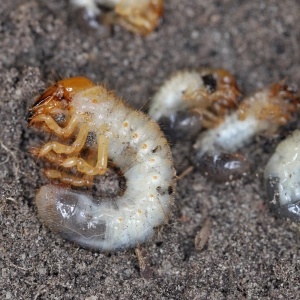
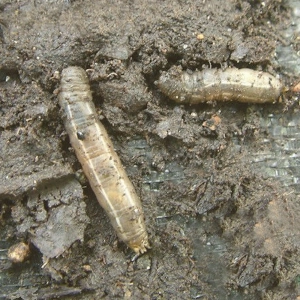
| Larval appearance | Legless, greyish brown, tubular (leathery) | C-shaped, creamy white, distinct legs, orange/brown heads. |
| Lifecycle duration | 1-2 years | 1-5 years |
| Primary feeding | Autumn and spring | Late summer, autumn and spring |
| Visible lawn damage | Yellow/brown drying patches of grass that is easily pulled up. | Similar dying patches, but the turf amy easily be rolled back like a carpet due to severed roots. |
| secondary damage | Birds (crows, starlings) and mammals (foxes, badgers) that tear up the lawn looking for grubs. | Birds (crows, starlings) and mammals (foxes, badgers) that tear up the lawn looking for grubs. |

Leatherjackets are typically 30mm-40mm long

Chafer grubs are usually seen in a C-shape and grow to around 20mm.
Both of these grub pests have the potential to cause and trigger extensive lawn damage. They both live in the soil, and they both eat the roots of grass.
The weakened grass attracts birds and mammals who can easily rip it up to get at the grubs below. This secondary damage can destroy a lawn completely.

Secondary lawn damage from birds and mammals can destroy lawns
Both pests can be controlled with chemical or biological controls at different times of year. Let’s look at their lifecycles and when to apply which control.
Leatherjacket Lifecycle

| Stage | Typical timing | Activity | Control |
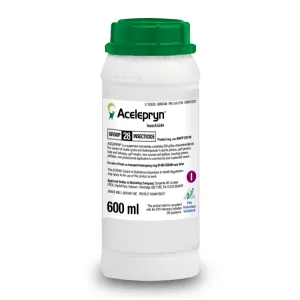
| Adult crane fly | July - end August | Adults emerge from the soil and mate. Females lay their eggs in the turf. They do not feed and only live for a few days. | Acelepryn (professional use only). Effective when used prior to egg hatch. |
| Egg | Late summer - early autumn | Eggs hatch a few weeks after being laid. | Not effective. |
| Larva (leatherjacket) | Autumn through to the following summer | This is the destructive stage. The larvae hatch and begin feeding on grass roots. They reach their largest and most damaging size in late spring / early summer the following year. |
Nematodes can be effective when applied during September and October. Acelepryn can be used to control the young grubs straight after hatching, so should be applied before egg laying. |
| Pupa | Mid to late summer | The fully grown larva pupates in the soil before the adult fly emerges to start the cycle again. | Not effective. |
Chafer Grub Lifecycle

| Stage | Typical timing | Activity | Control |
| Adult chafer beetle | Late spring / early summer | Adults emerge from the soil, often swarming to mate. Females lay clusters of eggs a few inches deep in the soil. |
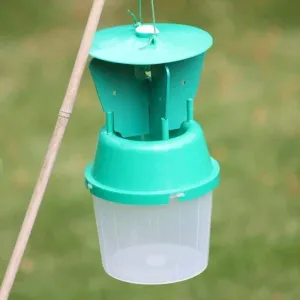
Chafer Beetle Traps |
| Egg | Late spring / early summer | Eggs hatch within a few weeks | Not effective |
| Chafer grub | Summer to the following spring | This is the main damaging stage. Young grubs hatch in mid-to-late summer and feed voraciously on grass roots and organic matter near the surface. As temperatures drop, they burrow deeper into the soil to overwinter. They return to the surface to feed heavily in the spring. | Nematodes Can be effective when applied July to October. Acelepryn can be used to control the young grubs straight after hatching, so should be applied before egg laying. |
| Pupa | Late spring, April - May | The fully grown larva forms an earthen cell and pupates in the soil before emerging as an adult beetle. |