The right choice of scarifying tool really depends on the size of your lawn, how much thatch and moss needs removing, and how much effort you want to put into the job!
Just a couple of notes before we look at these tools, if you are searching online, some companies might refer to scarifying as ‘dethatching’ or ‘raking’, so do include these terms in your search.
This post deals with available tools. To find out more about the process of scarifying, please refer to our blogs:
Aerating and scarifying a lawn
Petrol Scarifier
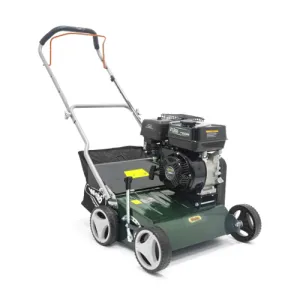
For larger lawns or areas with significant moss and thatch, a petrol scarifier can be an efficient choice. Petrol-powered machines don't require a mains cable, making them particularly useful for larger areas.
The Webb 40cm (16") Petrol Scarifier & Raker combines scarifying and raking functionality, helping you cover larger areas more quickly than you could with a manual rake.
This particular machine will scarify in 16” widths. This should give you an idea of how long it would take to scarify your whole lawn. It will also collect dead organic matter as you move saving you a later collection job.
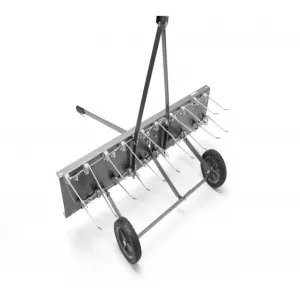
If you have a very large lawn and would prefer a wider working width, do take a look at a towable dethatcher / scarifier.
Best for: large lawns, heavier thatch and moss, and users who want powerful cable-free equipment.
Electric Scarifier
An electric scarifier can be a good choice for small to medium-sized domestic lawns. They are generally convenient to use and don't require petrol, although they do need access to a suitable power supply.
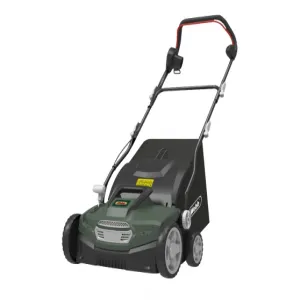
The Webb 2 In 1 Electric Scarifier & Lawn Raker offers two functions in one machine, making it useful for both scarifying and general lawn raking.
This machine will scarify in 14” widths and also collects the organic material as it goes, meaning you won’t have to rake it up afterwards.
Best for: Small to medium lawns, domestic gardens and regular lawn maintenance.
Lawn Rake
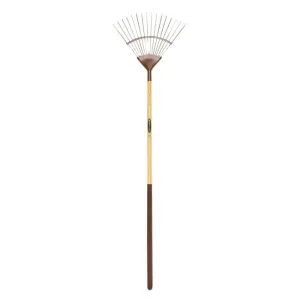
For smaller lawns or lighter scarification, a spring-tined or metal lawn rake can be a simple and cost-effective solution. Manual raking also gives you greater control over how aggressively you work the lawn, but there’s no getting away from it – raking to scarify can be hard work (brilliant exercise, but hard work!).
The Spear & Jackson Metal Lawn Rake will scarify most lawns and is also ideal for collecting moss and thatch after mechanical scarification.
Best for: small lawns, light thatch, targeted areas and clearing debris.
Cordless Scarifier
A cordless scarifier provides another option for gardeners who want powered equipment without a cable. Battery-powered machines are particularly convenient where access to mains electricity is limited.
When choosing a cordless model, do check the average battery runtime and whether the battery can be shared with other garden tools – this may not be the best option for you if you have a very large area to cover.
Best for: small to medium lawns and gardeners who want cable-free convenience without using petrol.
Other Useful Lawn-Care Tools
Scarifying is often part of a wider lawn renovation process, so a few additional tools can be useful.
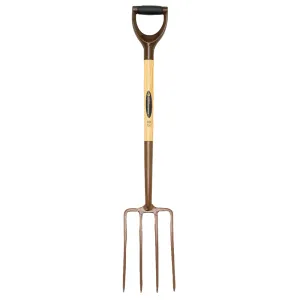
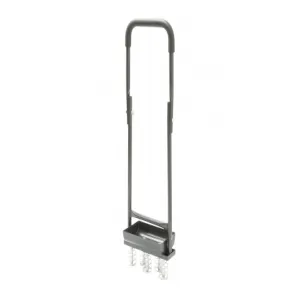
A garden fork or lawn aerator can help relieve soil compaction, while a leaf or garden rake is useful for collecting the debris removed by a scarifier.
Scarifying can leave behind thin or bare areas, a perfectly normal result of the process. Make sure you are ready to overseed afterwards - a grass seed spreader can help with overseeding.
Remember that scarifying and aerating are different jobs. Scarifying removes material from the surface of the lawn, while aeration creates channels in the soil to improve air and water movement.
Which Scarifying Tool Should You Choose?
| Lawn type | Recommended tool |
| Small lawn with light thatch | Lawn rake |
| Small to medium lawn | Electric or cordless scarifier |
| Medium to large lawn | Petrol scarifier |
| Large area with no mains power | Petrol or cordless scarifier |
| Compacted lawn | Scarifier + aerator |
Tips for Scarifying Your Lawn
For the best results:
- Mow the lawn first to make it easier for the scarifier or rake to reach the thatch.
- Choose suitable conditions and avoid working on waterlogged, frosty, frozen or excessively dry ground.
- Start gently, particularly with a powered scarifier. Avoid removing healthy grass unnecessarily.
- Clear away the debris using the scarifier's collection system or a lawn rake.
- Aerate if necessary - especially if the soil is compacted.
- Overseed thin areas where required to encourage a thicker lawn.
Scarifiers: Frequently Asked Questions
What is the best tool for scarifying a lawn?
It depends on the size and condition of your lawn. A lawn rake is suitable for smaller lawns, while electric, cordless or petrol scarifiers are more efficient for larger areas.
Is a scarifier better than a rake?
A powered scarifier can remove moss and thatch much faster than a manual rake, particularly on larger lawns. A rake is inexpensive and gives you greater control on smaller areas.
Can I scarify with a normal rake?
A suitable lawn rake can remove loose thatch and moss, although a spring-tined or metal lawn rake is generally more effective than a standard leaf rake for manual scarification.
When should I scarify my lawn?
Early autumn is a popular time for scarifying lawns in the UK, although the ideal timing depends on weather and lawn conditions. Avoid scarifying when the ground is waterlogged or otherwise unsuitable.
Will scarifying damage my lawn?
Scarifying can make a lawn look rough immediately afterwards, particularly if there is a lot of thatch to remove. The aim is to remove unwanted material without excessively damaging healthy grass. Good aftercare, including watering and overseeding where necessary, can help the lawn recover.
This post was written in collaboration with Ollie Wright.
Ollie Wright MBPR, FQA
Ollie Wright serves as the Technical Manager at Agrigem, where he oversees the integrity and accuracy of the company’s technical output. A recognised figure within the UK turf-growing sector, Ollie leads Agrigem’s technical response, ensuring that all guidance provided to retail and trade clients remains rigorous, compliant, and at the forefront of industry standards.
With a career built on a foundation of practical experience in farming and landscaping - including the successful management of his own firm - Ollie bridges the gap between theoretical science and field application. His extensive hands-on background is reinforced by industry credentials, including RHS Horticulture, amenity turf and hard surface BASIS, and FACTS qualifications. This unique combination of expertise allows him to deliver high-level strategic advice across diverse sectors regarding plant protection products and complex legislative requirements.