There are five elements that influence how controlled your spraying is, and therefore the amount of drift:
- Weather conditions
- Equipment calibration
- Physical barriers
- Application methods
- Spray technique and additional products
Let’s look at each of those in turn and give you practical tips for reducing spray drift.
Weather Conditions
When it comes to the weather and spraying chemicals, you want to pay attention to the wind and temperature. Here’s why:
Wind
In higher winds, the movement of product away from your intended plant(s) can negatively affect non-target areas and reduce product effectiveness.
Loss of product to wind means you might be under-dosing, which could cost you more in follow up applications.
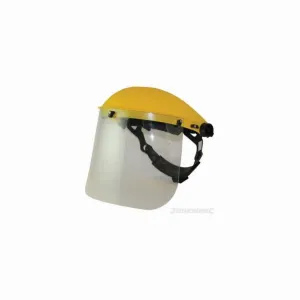
Don’t spray when it’s gusty as the herbicide could inadvertently blow into your face and eyes, onto exposed skin, or onto non-target areas. Always wear the correct PPE before spraying.
Perhaps surprisingly, don't spray when it’s dead calm either. This type of weather can lead to temperature inversions where tiny droplets hang in the air and travel miles away.
A gentle breeze is ideal. As long as you’re aware of the wind direction, a slight breeze will help you control the spray, ensuring it is carried to its intended target.
Choose early morning or late evening when winds are usually lighter. If you do see spray drift, application should be stopped immediately - regardless of wind speed.
Temperature
Avoid spraying when it’s over 25°C (77°F). High heat causes some herbicide droplets to become lighter (and drift more easily) or volatilise (turn into a gas), meaning drift occurs even after the liquid has dried.
Want to know more about weather impacts? Take a look at our guide to how it affects the performance of your product.
Equipment Calibration
How you set up your sprayer determines the size of the droplets. In theory, the larger the droplet, the lower the drift.
However, there are scenarios where a finer droplet size is necessary for coverage reasons, or where you are using a contact herbicide. Similarly, you may require a medium droplet if you’re using a systemic product.
If you do need a medium or fine spray, then only spray when weather conditions are suitable, and consider additional physical controls – see next point.
Keep your pressure low to avoid creating a ‘foggy’ spray and for the same reason, avoid using ‘mist’ settings on your spray nozzle.
Take a look at our guide to calibrating a knapsack sprayer and our guide to selecting the right spray nozzle for more information.
Physical Barriers
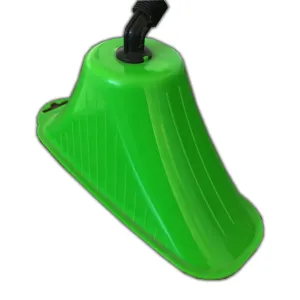
Additional physical barriers, like spray hoods (also called spray shields or spray guards) help reduce spray drift onto non-target areas.
But whilst they are by far the most effective anti-drift physical barrier, there are a couple of low-tech ideas you can try:
Plastic sheet
Consider holding a plastic sheet behind the plant you’re spraying to act as a backsplash – always keeping it directly behind the direction of your spray. Ensure it is washed over the area where the chemical was used after use.
Plastic bottle or bucket
Alternatively, if you’re targeting smaller plants, place an old bucket or a large plastic bottle with the bottom cut off over the target plant. Spray through the top/opening. This completely contains the spray.
Application Methods
For real application precision, you can avoid spray drift entirely by choosing an alternative application method.
Weed wipers
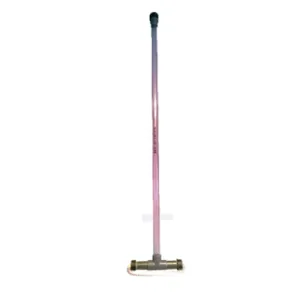
A weed wiper is a light, easy-to-use hand-held device for precise application of herbicide directly to the leaf with no risk of spray drift.
Injectors
Stem injectors deliver herbicide directly into the stem of the target plant with ‘dial-in’ features allowing you to adjust and control the volume of product.
Granules
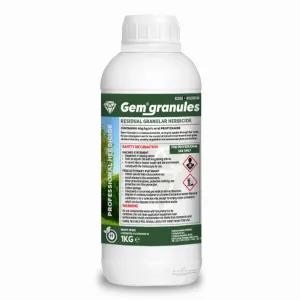
You can avoid spraying entirely by getting ahead of the game with pre-emergent herbicides. Products like Gem Granules are formulated as granules that can be applied directly to the ground around trees and ornamentals to prevent weed seeds from germinating.
Spray Technique and Additional Products
The way you spray has a big impact on the volume of spray drift.
Proximity
Always try and keep the nozzle close to the target plant – around 30–45 cm / 12–18 inches is usually most effective. If you stand too far away, you will be losing product to the air - the shorter the distance, the less time droplets have to drift.
Walking speed
If you are walking between rows of plants or spraying larger areas, try and adjust your walking speed so that the optimum amount of product is being delivered. Too slow, and the risk of drift increases; too fast and you may miss your intended target.
Spray Indicator
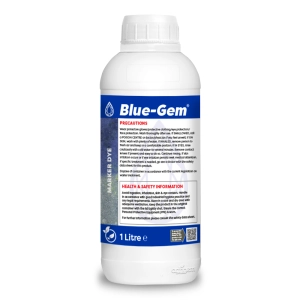
Use a spray indicator dye to improve your technique. Harmless dyes like Blue Gem are designed to mix with various pesticide and herbicide products and will wash away with rain or fade with sunlight.
The dye will let you see exactly where your spray has landed, allowing you to adjust your technique, speed of walking, or nozzle settings accordingly.
Drift Reducer
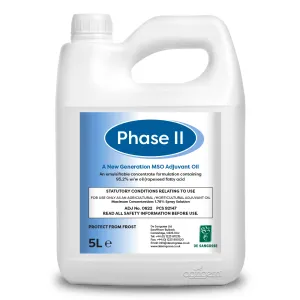
Products like Phase 2 are specifically formulated to help reduce drift. They do this by making the spray ‘heavier’ meaning the chemical falls straight to the target plant rather than drifting.
Phase 2 contains 842g/L esterified rapeseed oil. This helps the spray to acts as a sticker – dissipating the energy of the droplet on impact with the leaf. So instead of bouncing, the droplet flattens and stays put.
Air Inclusion Nozzles
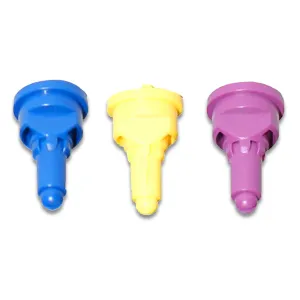
Air inclusion nozzles can help reduce spray drift. By injecting air into the spray droplets, they essentially become bubbles. When these land, they burst and the chemical stays on the target plant instead of bouncing off.
Adjuvants
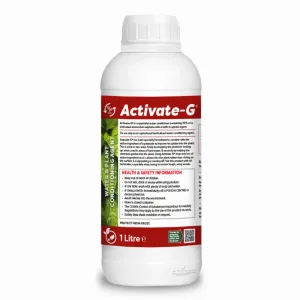
Adjuvants like Activate-G, can help reduce spray drift by reducing the surface tension of water. Once the spray droplets hit their target, the lack of water tension means that they ‘splat’ and spread over the target surface instead of bouncing off.
Questions about spray drift? Get in touch with our technical team for advice.
This guide was written in collaboration with Ollie Wright.
Ollie Wright MBPR, FQA
Ollie Wright serves as the Technical Manager at Agrigem, where he oversees the integrity and accuracy of the company’s technical output. A recognised figure within the UK turf-growing sector, Ollie leads Agrigem’s technical response, ensuring that all guidance provided to retail and trade clients remains rigorous, compliant, and at the forefront of industry standards.
With a career built on a foundation of practical experience in farming and landscaping - including the successful management of his own firm - Ollie bridges the gap between theoretical science and field application. His extensive hands-on background is reinforced by industry credentials, including RHS Horticulture, amenity turf and hard surface BASIS, and FACTS qualifications. This unique combination of expertise allows him to deliver high-level strategic advice across diverse sectors regarding plant protection products and complex legislative requirements.
Article Notes:
- Gem Granules are a trademark of Agrigem Ltd. They contain: 4% Propyzamide.
- Phase 2 is a trademark of De Sangosse Ltd. It contains 842g/L esterified rapeseed oil.
- Activate G is a trademark of Agrigem Ltd. It contains: 50% w/w activated ammonium sulphate
- Use plant protection products safely. Always read the label and product information before use. For label and safety information, refer to the manufacturer’s website.
- Only certified users may apply professional plant protection products. Find out more about safe use of pesticides here.