When it comes to lawn nutrition after drought, it is far better to use slow-release or controlled-release fertilisers. This is because standard or quick release fertilisers contain mineral salts which dissolve when there is plenty of water. However, in a drought, these minerals sit on the dry soil and suck moisture away from the grass roots – potentially burning or killing your lawn.
Things are not so desperate when it comes to your other plants - with several systems available to keep them thriving during very dry weather. This guide looks at what you can do to repair your lawn after drought, and how you can keep your other plants and shrubs healthy during a drought.
Please note - while your plants can be kept alive with efficient drip irrigation during a hosepipe ban, you should hold off on intensive lawn watering and fertilising until local water restrictions are lifted or steady rain is guaranteed.
Using Slow-Release Fertilisers
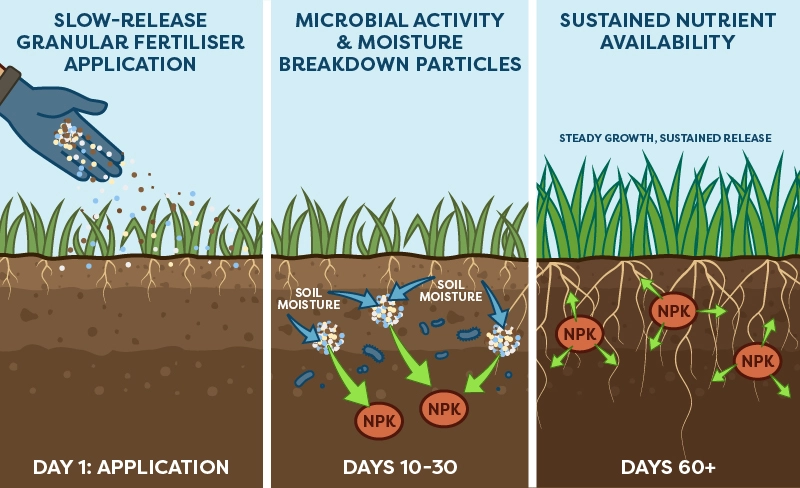
During a drought or very hot dry weather, grass slows its growth or goes dormant to conserve energy. It doesn’t want or need a massive spike of nutrients. Slow or controlled-release fertilisers feed lawns a tiny manageable amount of nutrients ‘drip-fed’ over a much longer timeframe - keeping it resilient without forcing an unwanted growth flush.
Just before we dig into the detail, it’s worth understanding that the terms ‘slow-release’ and ‘controlled-release’ are not interchangeable, they actually have slight differences in how they work:
Slow-Release Fertilisers
Slow-release fertilisers rely on microorganisms in the soil to break down the nutrients so the grass can use them. The nutrients can be organic or synthetic. They usually deliver nutrition over a period of about 8-12 weeks.
Agrigem stocks a range of slow-release fertilisers depending on your situation and nutritional needs:
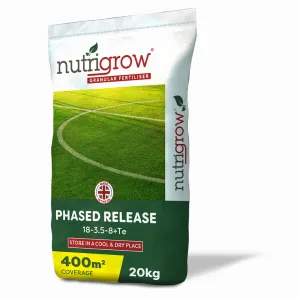
- Nutrigrow Phased Release 18-3.5-8+1Mg
- Nutrigrow N-Boost 15-5-5+4Ca+2Mg+15S
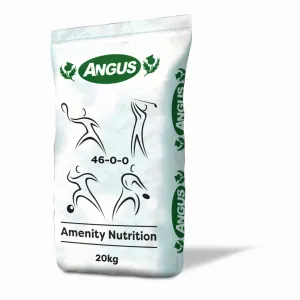
- ProloNg 46-0-0
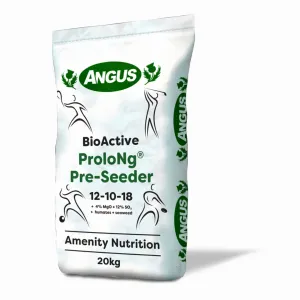
- ProloNg 12-10-18+Trace
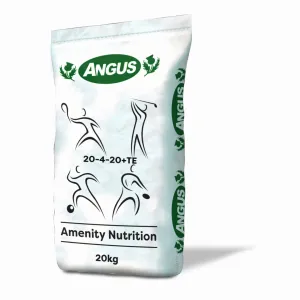
- ProloNg 20-4-20+Te
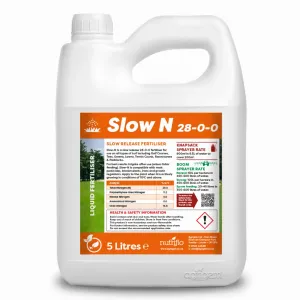
- Nutriflo Slow N 28-0-0
- Nutrigrow Soluble Urea
For most lawns with average nutritional needs, we would recommend Nutrigrow Phased Release
Controlled-Release Fertilisers
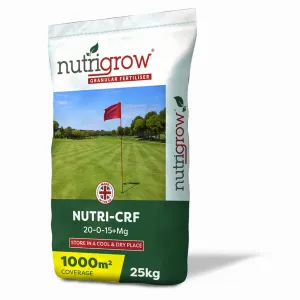
Controlled-release fertilisers like NutriCRF are a little more high-tech. They use a polymer or sulphur coating around each individual granule. Water penetrates the outer shell, dissolves the nutrients inside into a liquid state and then those nutrients slowly leak out through microscopic pores in the coating when the temperature and moisture levels are conducive to grass growth.
Controlled release fertilisers can last anywhere from 3 to 12 months depending on the thickness of the coating. These are usually only used in specialist turf management.
Applying slow or controlled-release fertiliser
Ideally you want to irrigate your lawn first then time your application just before a steady gentle rain is expected. You want the rain to fall within 24 hours of your fertiliser application.
However, most slow-release fertilisers will not scorch, (that is part of the idea behind using them in dry conditions), you can put them down when it is dry and wait for the rain or dew to dissolve them. As long as they are on the soil and not stuck to the leaf because they were applied to damp grass, they will be fine to apply to dry ground.
If the rain doesn’t appear as forecast, you may then run the risk of the fertiliser damaging your grass as described above – so in this situation, you will need to water it in using a sprinkler. Avoid a light sprinkling – you want to ensure the nutrition is properly watered in and can reach the grass roots.
Note - only use this sprinkler method if there is no active hosepipe ban in your area.
If you are waiting for rain and have a good forecast, just make sure you avoid applying it right before a severe thunderstorm, as torrential rain might just wash your granules away.
In summary, do not apply fertiliser to dry and heat-damaged lawns unless you are certain it can be thoroughly watered in by rain or a permitted water source
Irrigation Systems
While slow-release fertilisers are perfect for getting your lawn back on track, keeping the rest of your garden thriving during dry spells requires a different approach. That’s where smart irrigation comes in.
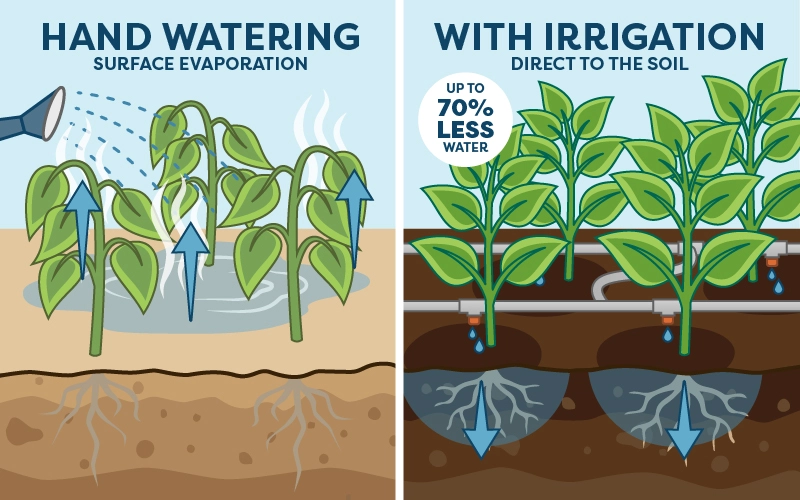
Because drip irrigation systems deliver a controlled amount of water direct to the soil - and use up to 70% less water than hand-watering - they are one of the most environmentally friendly ways to water garden plants.
Rather than worry about how much water your plants need - or the best time of day to water your beds, borders, pots, and vegetables - drip irrigation manages the whole process for you, meaning they’re ideal to use during droughts.
Precision is key with drip irrigation – you position the emitters to deliver the water direct to plant roots while the system provides water consistently without risk of evaporation.
Importantly, drip irrigation systems can be used during a hosepipe ban when used in accordance with manufacturer instructions.
We stock a range of irrigation systems and accessories including:
- Hozelock Easy Drip Universal Kit
- Rain Bird Drip Watering Starter Kit
- Hozelock Solar Select Automatic Watering Kit
- Rain Bird Shrub Watering Kit
- Hozelock 20 Pot Watering Kit
Unsure which irrigation kit or fertiliser is right for your garden? Drop our Tech Team a question, or explore our full range of garden care products today.
This post was written in collaboration with Harry Glenn.
Harry Glenn
Harry Glenn is Agrigem’s Technical Account Manager in charge of sports.
Prior to his move to Agrigem, Harry enjoyed a career in business development with, among others, a well-known sports turf contractor. This role exposed him to some of the UK’s most prestigious sporting venues including Cheltenham Racecourse, Wimbledon, Wentworth and Lords - delivering a lifelong appreciation of the benefits of high-quality sports turf.
An experienced Account Manager, Harry has a genuine interest in the sports turf sector and underpins much of his advice and guidance with practical experience at the coalface of turf growing. When not talking about turf, Harry is playing on it, competing at county level golf with a scratch handicap!
Article Notes:
- Nutrigrow is a trademarks of Agrigem Ltd.
- ProloNg is a trademark of Angus Horticulture Ltd.
- Hozelock is a trademark of Hozelock Ltd.
- Rain Bird Irrigation Systems is a trademark of Rain Bird Corporation.
- Use plant protection products safely. Always read the label and product information before use. For label and safety information, refer to the manufacturer’s website.
- Only certified users may apply professional plant protection products. Find out more about safe use of pesticides here.