People often confuse horsetail with marestail. They are two different plants, but horsetail is often referred to as marestail incorrectly.
Horsetail is from the Equisetum species, with common or field horsetail (Equisetum arvense) being the most common. It only grows on land.
Marestail (Hippus vulgaris) is an aquatic weed often used as an oxygenating plant for shallow ponds. It does look similar to horsetail but can only been found in aquatic environments. Marestail is sparsely branched with upright shoots and is soft with no visible segments.
There are currently no herbicides (with approval to use in the UK) available to treat marestail; physical removal is the only way to treat it.

Horsetail and marestail are two different plants
Horsetail is a tough perennial survivor. Its ancestors date back more than 300 million years to the carboniferous period. During this era, they were known as calamites – giant tree-sized horsetails than grew to more than 30 metres high, dominating the landscape.
Although the horsetail we see today doesn’t grow anywhere near as tall as its ancient relatives, its root system is just as formidable. Rhizome roots reach up to 2-3m deep, with around 50% concentrated in the upper 25-50cm of soil. This means that even deep digging can leave root sections intact and able to regrow.
This extreme depth is the main reason that horsetail is difficult to kill, as most herbicides cannot effectively travel down to the entire root depth to kill the whole plant.
In addition, the deepest parts of the root system act as carbohydrate storage depots - giving the plant an incredible reserve of energy to regenerate, even when it is repeatedly cut back.
Identifying Horsetail
Horsetail is a dimorphic plant, meaning it produces two different types of shoots from its rhizomes: one for reproduction and one for photosynthesis.
In spring, first growth is seen as a shoot that is often described as resembling a small pale-coloured asparagus-like spear. These shoots will grow to around 30cm tall and are tipped with a distinct cone-like structure.

These shoots are short-lived, releasing their spores within a few weeks before shrivelling and dying back ready for the main summer growth.
From May to September/October a sterile vegetative shoot appears. This shoot is bright green and is branched from a central stem with whorls of needle-thin branches making it look like a small pine or fir tree.
Horsetail can grow to around 60cm tall in summer. The stems are very tough and coated in silica – making them resistant to most herbicides.
As temperatures drop, the shoots die back and wither away leaving the ground surface largely bare. However, the rhizomes remain alive and active underground waiting for spring to begin again.
Killing Horsetail on Your Driveway
On a surface where there are no other plants, you will need to use a strong total weedkiller that can penetrate the plant.
Chemical Control
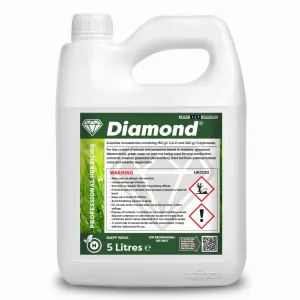
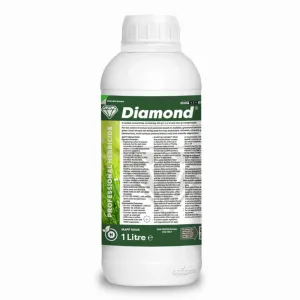
Diamond Horsetail weedkiller is recommended only for gravel surfaces. It contains a potent combination of active ingredients - glyphosate and 2,4-D - that helps penetrate the plant’s exterior cuticle, and will kill all vegetation that it comes into contact with.
To help the weedkiller absorb, you should:
- Wait for height: Apply the product when the stems are about 15-20 cm tall. This allows for maximum absorption of the chemical down to the deep roots.
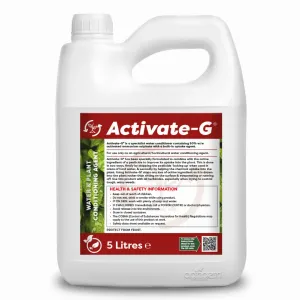
- Consider an Additive: Some products recommend adding an adjuvant like Activate G to the spray mix. This acts as a surfactant, helping the weedkiller stick to and penetrate the waxy stem.
Total weedkillers will not damage your driveway as they only affect plant tissue. However, be extremely careful of overspray and runoff to planted areas or spray drift onto non-target plants.
Physical/Non-Chemical Control
If the horsetail is growing in a garden bed next to the driveway, you can try covering the area with a heavy-duty membrane or a thick layer of cardboard and then add 20 cm of mulch to block out all light. This is not practical for the surface of a driveway but may help on the edges. However, this approach is likely to take several years to be effective.
Killing Horsetail in Your Lawn
For horsetail growing in your grass, you need a selective herbicide that will kill the weed but not the turf.
Selective Herbicide
Look for a selective weedkiller that is specifically effective against tough, woody weeds.
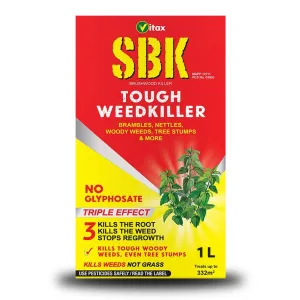
SBK Brushwood Killer (containing triclopyr) is a popular, readily available option that is often recommended for use in lawns to control tough weeds like horsetail - without killing the grass.
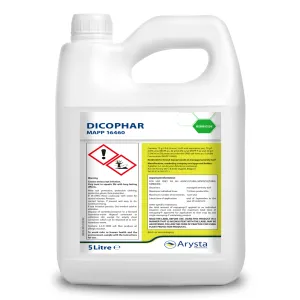
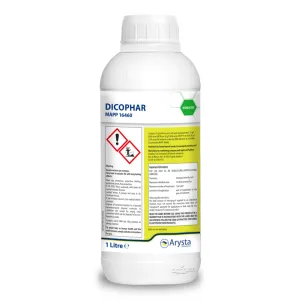
Dicophar is also effective in a lawn situation. Apply when the plant is actively growing and at the recommended height - around 15 – 20 cms.
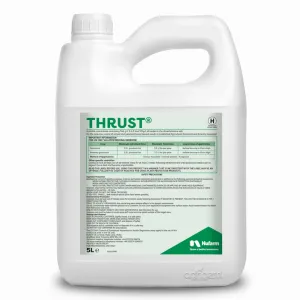
If you are treating horsetail in grassland, a mix of Thrust and Grazon can be used.
The Long Game
Horsetail is a survivor, so patience is key - you will likely need multiple applications (sometimes over several years) to deplete the massive underground root system.
When you treat horsetail for the first time, it knows that it is under attack. Following the top growth dying back, it will throw a lot of energy into producing new vegetative growth (epicormic growth). For this reason, it can appear that spraying it off has made it grow even more than before treatment, but this new growth is:
- a lot weaker than the initial growth and
- has taken a large amount of energy from the plant’s reserves to produce.
Therefore, continued treatment of this regrowth will begin to have a real detrimental effect on the plant and its root structure, so don’t give up!
The best time to spray is usually between March and September, when the plant is actively growing and can transport the chemical down to its roots.
Always read and follow the instructions on the herbicide label for dilution, application rate, and safety precautions. For specific advice relating to horsetail / marestail on your property, please get in touch with our technical team.
***
This post was written in collaboration with Ollie Wright.
Ollie Wright MBPR, FQA
Ollie Wright serves as the Technical Manager at Agrigem, where he oversees the integrity and accuracy of the company’s technical output. A recognised figure within the UK turf-growing sector, Ollie leads Agrigem’s technical response, ensuring that all guidance provided to retail and trade clients remains rigorous, compliant, and at the forefront of industry standards.
With a career built on a foundation of practical experience in farming and landscaping - including the successful management of his own firm - Ollie bridges the gap between theoretical science and field application. His extensive hands-on background is reinforced by industry credentials, including RHS Horticulture, amenity turf and hard surface BASIS, and FACTS qualifications. This unique combination of expertise allows him to deliver high-level strategic advice across diverse sectors regarding plant protection products and complex legislative requirements.
Article Notes:
- Diamond contains 160g/L 2,4-D + 240g/L glyphosate. Diamond is a trademark of Agrigem Ltd.
- SBK Brushwood Killer contains 48g/L triclopyr. SBK is a trademark of Vitax Ltd.
- Dicophar contains 70g/L 2,4-D, 70g/L MCPA, 42g/L mecoprop-p, 20g/L Dicamba. Dicophar is a trademark of Arysta LifeScience Benelux SPRL.
- Thrust contains 344 g/l 2,4-D +120g/l dicamba. Thrust is a trademark of Nufarm UK Ltd.
- Grazon Pro contains 240g/L triclopyr and 60g/L clopyralid. Grazon Pro is a trademark of Corteva Agriscience and its affiliated companies.
- Use plant protection products safely. Always read the label and product information before use. For label and safety information, refer to the manufacturer’s website.
- Only certified users may apply professional plant protection products. Find out more about safe use of pesticides here.