If you’re new to soil testing, you might be wondering why you should test in the first place. Well, you could buy the most expensive fertiliser, but if your soil pH is off, your plants won’t benefit from it – you’ll be wasting your money.
Other reasons to test your soil:
Soil Safety
We’ve all been guilty of applying a generic ‘balanced’ fertiliser, but again, unless we know the nutritional make up of our soil, we can do more damage than good.
Imagine your soil having a surplus of phosphorous for example, but a lack of nitrogen – adding more balanced fertiliser can make the phosphorous levels toxic while failing to fix the nitrogen deficiency.
Better Harvests
Sometimes your soil may have the right amount of macronutrients, but a tiny lack of boron or zinc – for example - could be the cause of a poor harvest. You won’t know this unless you soil test.
Environmental Stewardship
When you over-fertilise, plants can’t save any excesses for later. They simply wash away with the next rain ending up in local streams and groundwater. Testing ensures you’re only putting down what the land can actually hold.
In short, testing our soil lets us know what lies below the surface, allowing us to make informed nutritional decisions.
Which Nutrients are Tested?
With a lawn, paddock or vegetable soil analysis, you’ll be able to identify levels of:
- Phosphate
- Potassium
- Magnesium
- Soil pH
Optional:
- Sulphur
- Zinc
- Boron
- Manganese
- Iron
- Copper
- Organic Matter
Bear in mind that soil tests won’t test for nitrogen as it is extremely ‘mobile’. It doesn’t stick to the soil particles very well so depending on the weather you can find that samples taken on consecutive days can be wildly different.
Nitrogen is always looking for a way out. Through a process called volatilisation, nitrogen can literally turn into a gas and float off into the atmosphere. By the time your soil sample sits in a mailbox and arrives at the lab, the nitrogen levels might be significantly lower than when you collected the sample.
Because of this, the metric to pay attention to is ‘total organic matter’. This is the ‘nitrogen bank’. Our laboratory looks at how much organic material is in your soil, knowing that as it breaks down, it will release a predictable amount of nitrogen over the growing season.
This is why we need to know what you’re growing because we can calculate how much nitrogen a lawn needs per 1,000sq ft (for example), as opposed to the requirements of vegetables.
We also sell soil tests for toxic metals present in the soil. Toxic metals like lead and mercury can harm plant development and human or animal health. This test looks for traces of:
- Copper
- Zinc
- Lead
- Cadmium
- Mercury
- Nickel
- Chromium
Optional:
- Molybdenum
- Selenium
- Arsenic
- Fluoride
How to Take a Soil Sample
Once you’ve ordered the soil test kit you want, you’ll receive the following in all of our kits:
- Soil sampling guide
- Soil sample bag(s)
- Pre-completed Standard Soil Analysis Request form. You do not need to fill this in.
- Pre-paid return envelope
Once you have your kit, you’ll need:
- A clean trowel, digging tool, or soil sampling tool
- A plastic bucket
- A sharp knife for lawn soil sampling
When to Take Your Soil Sample
It is best to take your soil sample before any applications of fertiliser or other treatment (including manures, weedkillers, regulators, wetting agents, or pest control products).
If you have recently applied any of the above, wait two to three months before taking your sample.
How to Take Your Soil Sample
This is the same process for all kit types:
- Write your name and the date you took your soil sample onto the sample bag with a biro. It is easier to do this before you put soil into the bag!
- Walk in a ‘W’ configuration across the area you want to sample, collecting samples from various points along the way.
- Sample to the depth of the plant roots. For lawn and paddock soil, dig to the depth of the lowest point of the grass roots, and for vegetable soil analysis, dig to the depth of the deepest vegetable root. For toxic metal soil testing, take the samples at around six inches deep.
- Mix the samples together in a bucket.
- Fill the plastic sample bag with the well-mixed soil. You do not need to send more than a full bag, 400g-500g is usually sufficient. However, if you have purchased multiple tests for very large areas (fields and paddocks for example), you may be sent more than one sample bag and should fill all of them.
- Place your soil sample(s), together with your completed Standard Soil Analysis Request form into the pre-paid envelope, and post.
Top Tips for Sampling
- Make sure you include one sample from any problem area(s) if appropriate but always include samples from ‘good’ areas too. This is a good way if you want an overall impression of the whole area, but sometimes you will want to get two analyses done so that you can see why there is a distinct difference between a ‘good’ and a ‘bad’ area.
- Mix the soil well to ensure you send a good representative sample.
- For lawn soil sampling, remove a section of turf by cutting a small square. Replace the turf once you have collected the soil.
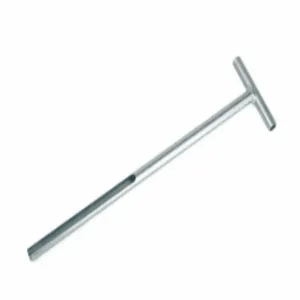
- If you are testing a large area, you might find a soil sampling tool is easier than a trowel – making the process of collecting simpler.
- Avoid using metal buckets or containers for mixing, as some metals can contaminate trace element analyses.
When Can You Expect Your Results?
Allow up to three weeks for your results to arrive. They are often much quicker than this, but response rates can vary depending on laboratory capacity. If you haven’t received your results within three weeks, please get in touch by calling: 01522 246491.
What Will Your Results Look Like?
You will receive a tailored report document. This will be emailed to you and will be in PDF format.
You will see a series of tables that will show the levels of various nutrients present in your soil. The nutrients and trace elements listed will vary depending on the analysis you have requested.
You will receive an explanation of your results together with tailored fertiliser recommendations if appropriate.
If you are testing for toxic metals, these will be shown in your results instead of soil nutrients.
Questions about soil testing? Get in touch with our technical team today.
This post was written in collaboration with Ollie Wright.
Ollie Wright MBPR, FQA
Ollie Wright serves as the Technical Manager at Agrigem, where he oversees the integrity and accuracy of the company’s technical output. A recognised figure within the UK turf-growing sector, Ollie leads Agrigem’s technical response, ensuring that all guidance provided to retail and trade clients remains rigorous, compliant, and at the forefront of industry standards.
With a career built on a foundation of practical experience in farming and landscaping - including the successful management of his own firm - Ollie bridges the gap between theoretical science and field application. His extensive hands-on background is reinforced by industry credentials, including RHS Horticulture, amenity turf and hard surface BASIS, and FACTS qualifications. This unique combination of expertise allows him to deliver high-level strategic advice across diverse sectors regarding plant protection products and complex legislative requirements.
Article Notes:
- Use plant protection products safely. Always read the label and product information before use. For label and safety information, refer to the manufacturer’s website.
- Only certified users may apply professional plant protection products. Find out more about safe use of pesticides here.