Identifying Cleavers
Cleavers has a uniquely ‘sticky’ texture caused by tiny, hooked hairs.
- Leaves are narrow and green, growing in whorls of six to eight along the stem.
- The stems are square in section, weak, and sprawling, growing up to 1m (40in) or more as they scramble over other vegetation for support.
- Tiny, greenish-white flowers with four petals appear between May and August.
- Cleavers has small, round green or purple burrs (3–5mm) covered in hooks that easily attach to clothing and animal fur.
While young cleaver shoots are edible if cooked (to soften the hooks), the plant can cause an angry skin rash or irritation in some individuals. Always wear gloves when handling large quantities.
Cleavers is among the most competitive broad-leaved weeds due to its rapid growth and efficient dispersal.
- It forms a dense network of stems that can shade out and smother delicate garden plants, competing for water and nutrients.
- A single plant can produce 300–400 seeds, which can remain dormant in the soil for up to six or seven years.
- The hooked seeds ‘cleave’ to anything that brushes past, meaning they are easily introduced to clean borders via pets, clothing, or garden tools.
Controlling Cleavers
Success in controlling cleavers depends on early intervention before the plant has a chance to set its sticky seeds.
Manual Removal
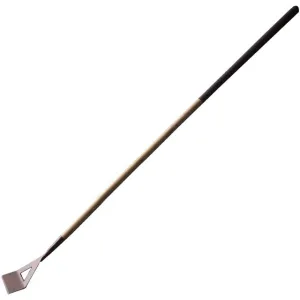
Regularly hoeing seedlings as soon as they appear is the most effective natural control. Aim to sever the stems just below the soil line on a warm day so the plants dehydrate quickly.
Established plants are easy to pull by hand as they have a relatively shallow root system. Ensure you remove them before the green burrs turn brown and drop.
Applying a 5cm layer of bark mulch or garden compost can suppress seed germination by excluding light.
Do not add plants with developed seeds to a standard garden compost heap, as the seeds may survive and be redistributed later.
Chemical Removal
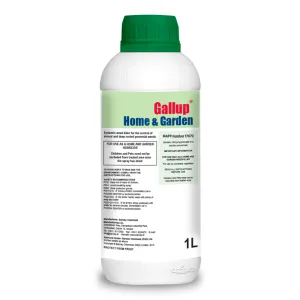
For large, clear areas, a total herbicide containing glyphosate – like Gallup Home & Garden - can be used. For best results, apply when the plant is actively growing (March to October).
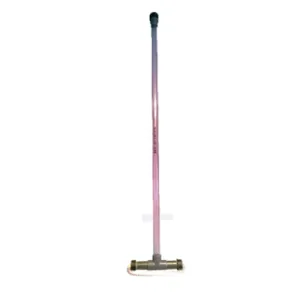
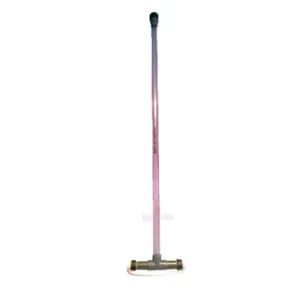
Use a weed wiper to avoid contact with nearby garden plants, as glyphosate is a total herbicide. Take a look at our guide to avoiding spray drift for more information on controlled application.
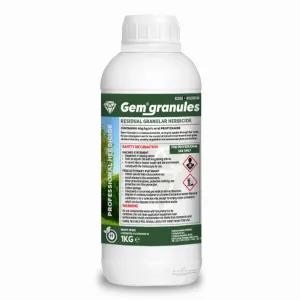
Gem Granules are very effective on Cleavers, so using this at the end of Jan will massively help reduce the population that actually germinate.
Always use plant protection products safely and read the label and product information before use. For label and safety information, refer to the manufacturer’s website. Remember, only certified users may apply professional plant protection products.
This guide was written in collaboration with Ollie Wright.
Ollie Wright MBPR, FQA
Ollie Wright serves as the Technical Manager at Agrigem, where he oversees the integrity and accuracy of the company’s technical output. A recognised figure within the UK turf-growing sector, Ollie leads Agrigem’s technical response, ensuring that all guidance provided to retail and trade clients remains rigorous, compliant, and at the forefront of industry standards.
With a career built on a foundation of practical experience in farming and landscaping - including the successful management of his own firm - Ollie bridges the gap between theoretical science and field application. His extensive hands-on background is reinforced by industry credentials, including RHS Horticulture, amenity turf and hard surface BASIS, and FACTS qualifications. This unique combination of expertise allows him to deliver high-level strategic advice across diverse sectors regarding plant protection products and complex legislative requirements.
Article Notes:
- Gem Granules is a trademark of Agrigem Ltd.
- Gallup Home & Garden is a trademark of Barclay Chemicals Manufacturing Ltd.
- Use plant protection products safely. Always read the label and product information before use. For label and safety information, refer to the manufacturer’s website.
- Only certified users may apply professional plant protection products. Find out more about safe use of pesticides here.