The first rule of tank-mixing is to always consult the product label and the manufacturer’s website. The label is the law when it comes to product information and must always be followed.
The label and/or manufacturer’s website will state any approved tank mixes, compatibilities with different product types, restrictions and warnings.
Jug Testing
If the label does not provide the information you are looking for, contact your product provider for professional advice.
If, following advice, you want to progress a test of your desired product combination(s), you should conduct a ‘jug’ test – a small-scale test that will indicate the physical compatibility between two products.
To conduct a jug test, first ensure you are wearing the correct chemical-safe PPE. Conduct your jug test outside or in a well-ventilated area and ensure the jug is placed on a stable, non-flammable surface.
Select a clean clear jug and use a directly proportionate amount of each product in your mix. For example, use 100 millilitres to represent 100 litres of spray solution.
Add this proportionate amount of each product in the correct mixing order, shaking well after each addition.
If the mixture remains uniform, the products you are mixing are likely to be physically compatible.
Caution on Mixing and Incompatibility
Note that jug testing only shows you this physical compatibility of two products – for example, whether they will separate, clump, form a sludge, or react in any other physical way. This test does not guarantee successful application or efficacy.
The risks that are not shown with a jug test are chemical incompatibility, and biological incompatibility or phytotoxicity.
Chemical Incompatibility
Antagonism
Antagonism is where one product neutralises or deactivates the other. An example of antagonism could be where high pH in the water carrier reduces the efficacy of certain pesticides. In this instance, the weeds may not die or may only be partially affected.
To detect the presence of antagonism, conduct an Efficacy Field Test as follows:
- Find an area with a good, uniform population of the target weed.
- STRIP ONE: Apply the tank mix to a very small, isolated area at the recommended application rate.
- STRIP TWO: Apply the first product alone to a nearby test strip.
- STRIP THREE: Apply the second product alone to a third nearby test strip.
- STRIP FOUR: Leave a small area untreated as a baseline (control) for comparison.
- Assess the weed control over the next seven to 14 days. If the combined mix (Strip One) performs significantly worse than the individual products (Strips Two and Three) acting on their own, antagonism has occurred, and the mix should not be used.
Exothermic and Endothermic Reactions
Exothermic reaction is where the chemicals react to produce heat when mixed. This is usually a very fast reaction that indicates a serious incompatibility problem. In this instance you should not combine these products.
To test for exothermic reaction during the jug test, place the jug on a cool non-flammable surface or hold the jug carefully. If the mix feels warm or hot, do not use it.
Reactions can also be endothermic – whereby the jug will feel cold to the touch.
Gas or Fumes
Perform the jug test outside or in a well-ventilated area. Observe the mixture for any bubbling, fizzing, or strong smells. If any of these reactions occur, do not use this mixture.
Biological Incompatibility / Phytotoxicity
Phytotoxicity is where there is a risk that the combination of chemicals damages the crop or lawn you are trying to protect. In this scenario, you may be using selective herbicides and are seeking to improve their effectiveness.
Phytotoxic damage causes burning (necrosis), yellowing (chlorosis), stunting or distorting of plant foliage. To test for phytotoxicity potential, conduct a crop safety test as follows:
- Select an inconspicuous area of the lawn or crop that is well-established.
- Apply the tank mix to the small, isolated area at the recommended rate.
- Leave an equivalent, adjacent area completely untreated.
- Monitor the treated area for several days to two weeks. Check for signs of injury:
- Burning (brown or black patches/spots)
- Yellowing (chlorosis)
- Leaf or plant distortion (cupping, puckering, or stunting)
- Death (necrosis)
- If damage occurs at the standard rate, do not use the mix.
Note that phytotoxicity can sometimes be delayed so ensure you monitor the test area for the full period of time.
A Note on Application Rates
Tank mixing requires careful calculation because the individual products may have different application rates.
To calculate your final application rate, make sure you base your calculations on the rate of the active ingredient (how much chemical should be applied per unit area), and the volume of water / carrier required to spray the chemical.
To reconcile different application rates:
1. Determine the required product rates so that you only apply the labelled dose for each product simultaneously regardless of water volume. For example:
- Product A application rate is 1.0L/ha.
- Product B application rate is 0.5L/ha.
The final mix in this case is 1.0L of product A with 0.5 L product B for every hectare sprayed.
2. Now choose one spray volume (litres water per hectare, L/ha) that is appropriate for both products and your spray equipment. To do this, look at the recommended water volume on both product labels. For example:
- Product A: 100-200L/ha
- Product B: 150-300 L/ha
Now choose the highest common volume within the approved range, In this example, choosing 200L/ha is safe as it falls within both ranges.
The final mix calculation is governed by the area you want to cover, ensuring you have the correct full labelled dose of each active ingredient within the volume of water.
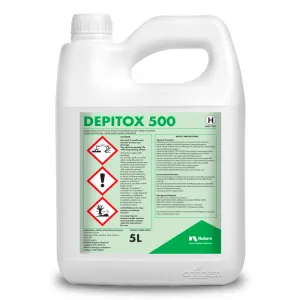
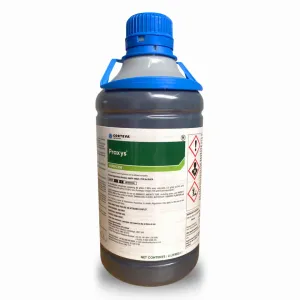
It is quite common to reduce the rates of some of the products in a tank mix to reduce the chance of any damage to the crop. For example, Praxys at 2L/ha (full label rate) with Depitox at 1L/ha (1/3 label rate).
For help making this final calculation or for queries relating to specific products, get in touch with our technical team, for expert advice.
Common Product Combinations
Testing is not always required for all products. Some common combinations include:
Selective tank mixes
Paddocks
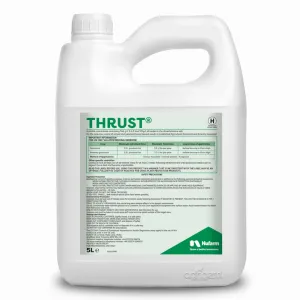
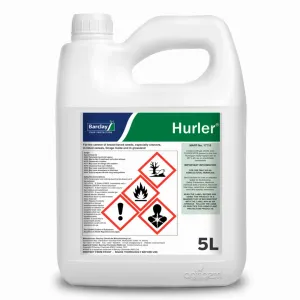
3.5L/ha Thrust + 1L/ha Hurler
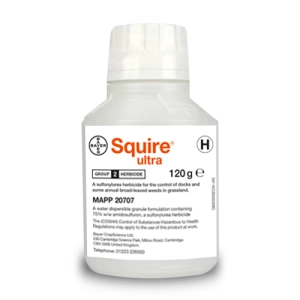
2.5L/ha Thrust + 1L/ha Hurler + 60g/ha Squire Ultra
3.5L/ha Thrust + 1L/ha Grazon
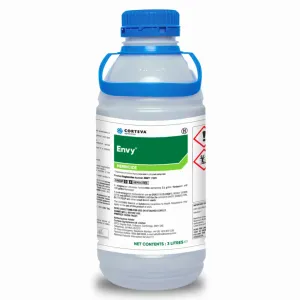
3.5L/ha Thrust + 2L/ha Envy
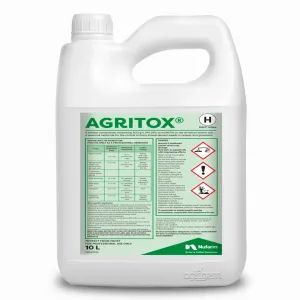
3L/ha Agritox + 3L/ha Depitox
2L/ha Envy + 1L/ha Grazon
Lawns/Sports Turf
2L/ha Praxys + 1L/ha Depitox
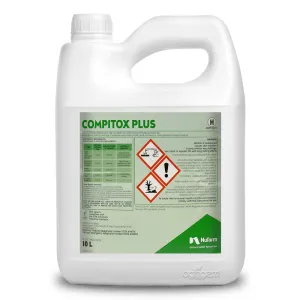
2L/ha Compitox + 3L/ha Depitox
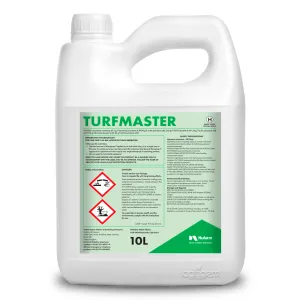
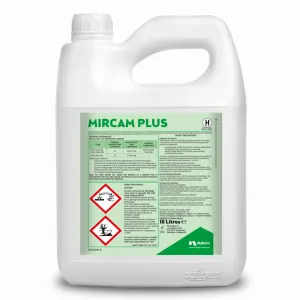
5L/ha Turfmaster / Mircam Plus + 2L/ha Depitox
Total/Residual tank mixes
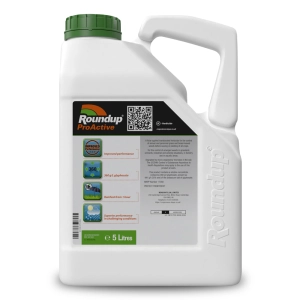
5L/ha Roundup Pro Active / Bronco / Gallup Biograde + 150g/ha Chikara (can only be done once a year and will give 5-6 months control)
5L/ha Roundup Pro Active / Bronco / Gallup Biograde + 500g/ha Valdor Flex / Lockstar (can only be done once a year and will give 3-4 months control)
5L/ha Roundup Pro Active / Bronco / Gallup Biograde + 250g/ha Valdor Flex / Lockstar + 75g/ha Chikara (can be done twice a year and will give 4-5 months control each time)
Fertilisers
The vast majority of liquid fertilisers are compatible with herbicides with the exception of Ferro-Gem, Nitro-Gem and Nitro-Fe due to the high iron content in these products (as iron tends to fall out of suspension very easily). We also advise against mixing soluble iron with most herbicides for the same reason.
In addition, soluble urea can sometimes be an issue because an endothermic reaction occurs when it dissolves in water. A tank mix of this together with Praxys will freeze the lines in a sprayer, so caution needs to be used. We advise allowing the urea to dissolve in less water than is required and then topping it up to bring the temperature back up prior to adding any chemicals.
Exclusions
Conversely, some mixes are expressly forbidden. These include products like Doxstar Pro where the label states: “DO NOT mix with phenoxy herbicides – this may compromise translocation of Doxstar Pro to the roots."
Note that Thrust contains 2,4-D, which is a phenoxy herbicide, indicating that mixing Doxstar Pro and Thrust is not advised due to chemical incompatibility and reduced efficacy.
Finally, if you are mixing your product with an adjuvant – products designed to enhance the performance of herbicides - remember to always refer to the label and add the adjuvant in the correct order. With adjuvants like Activate G for example, you must always add it to the water before the pesticide.
It is always best to take advice from qualified agronomists before attempting to improve the efficacy of any pesticide product. Never guess, always check with the professionals before embarking on tank mixing.