To get the absolute best results, order matters. By cutting back old growth first, feeding the soil, and letting the rain wash the nutrients in, you will set up the perfect trap for weeds. They will put on a rapid spurt of fresh growth, making them incredibly vulnerable to treatment.
Step 1: Top the Paddocks
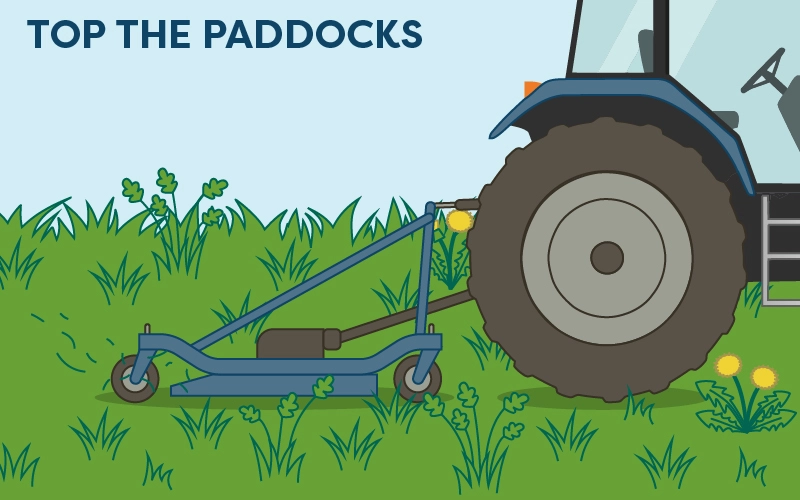
Before you put anything down on the field, top your paddocks.
Cutting back the older, coarse growth encourages the grass to spread out and thicken. Doing this before you fertilise ensures you won't smash or shatter your fertiliser granules with the mower blades.
Step 2: Feed the Soil (Apply Granular Fertiliser - Same Day)
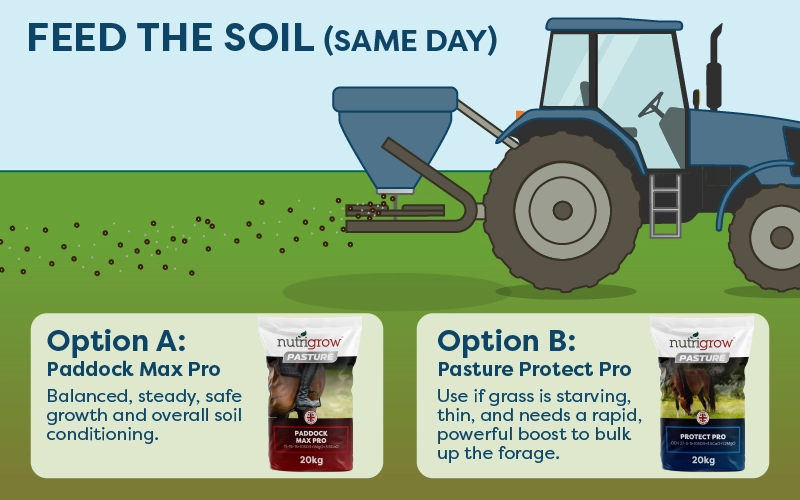
Immediately after topping, get your granular fertiliser down. The upcoming rain is the perfect vehicle because it safely dissolves the granules and washes the nutrients straight into the soil, preventing them from scorching the grass blades.
We recommend looking at the Paddock Pro range depending on what your soil needs right now:
Option A: Paddock Max Pro (Polysulphate-Based Multi-Nutrient)
- Why choose Paddock Max Pro? Choose this if want steady, safe growth.
- Instead of just blasting the grass with nitrogen, this multi-nutrient formula powered by Polysulphate delivers a balanced, slow-release diet of sulphur, potassium, magnesium, and calcium.
- The Benefit? It focuses heavily on root development and structural strength. This is ideal for horse owners who want to improve long-term soil health and grow a dense, hard-wearing sward that can withstand heavy hooves, without causing the sudden, sugar flush of grass that can trigger laminitis.
- In summary - go with Paddock Max Pro for balanced, steady, safe growth and overall soil conditioning.
Option B: Pasture Protect Pro OEN (Enhanced Nitrogen)
- Why choose Pasture Protect Pro? Choose this if your pasture is looking yellow, thin and over-grazed, or needs a serious volume boost.
- This is a high-performance, enhanced nitrogen fertiliser specifically formulated for grassland. The OEN technology ensures the nitrogen is stabilised, meaning it releases efficiently into the grass over time rather than washing away in heavy downpours.
- The Benefit? It focuses on leaf volume and rapid recovery. It will quickly kickstart thick, vibrant green top-growth. It is perfect if you need to bulk up your grass quickly, recover a heavily poached winter paddock, or grow a heavy crop for hay or haylage cutting.
- In summary - go with Pasture Protect Pro OEN if your grass is starving, thin, and needs a rapid, powerful boost to bulk up the forage.
Step 3: Wait 10 Days, Then Spray
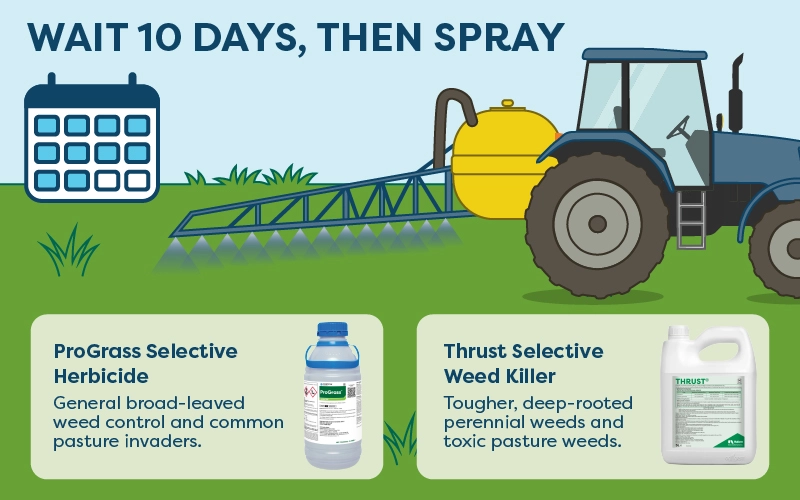
Leave the paddock alone for about a week to 10 days after fertilising. The combination of fresh nutrition, warmth, and rain will cause those topped weeds to flush out a sudden burst of brand-new growth.
Young, fresh weed growth is significantly easier to eradicate than old, woody weeds. Once this fresh growth appears, apply your selective herbicide. Because the weeds are actively growing, they will rapidly absorb the treatment for a much better kill rate.
Choosing Your Weedkiller Weapon: ProGrass vs. Thrust
When it comes to selecting your herbicide, do not mix these two products together. They are highly effective powerhouses on their own, designed for different weed profiles. Inspect your fields and choose the one that matches your problem areas:
| ProGrass Selective Herbicide | Thrust Selective Weed Killer | |
| Best For | General broad-leaved weed control and common pasture invaders. | Tougher, deep-rooted perennial weeds and toxic pasture weeds. |
| Targets | Buttercup (creeping & meadow), chickweed, clover, dandelion, dock, nettles, plantain, daisy, cow parsley, hogweed, ground ivy, nettle, horsetail, plantain, sorrel, vetch, yarrow and bindweed. | Ragwort, rush, thistles (creeping & spear), bramble, bracken, sycamore seedlings, Himalayan balsam, buttercup, chickweed, clover, daisy, dandelion, dock, nettles, plantain. |
Always check the product label for the specific stock exclusion period after spraying. Horses must be kept off treated pastures until the weeds (especially ragwort) have completely died back and decayed.
By taking advantage of the wet weather today, you'll be generating robust pasture, growing more grass that is healthier and safer for your horses, all summer long!
This post was written in collaboration with Millie Wilkinson.
Millie Wilkinson
Millie Wilkinson is Agrigem's Account Manager in charge of equine customers. She has more than 12 years' experience in the equine sector including running her own yard, competing for the England team in the Pony Club, working as a showjumping competition groom, and latterly a showjumping coach.
Millie has ridden, owned, and sold horses her whole life. She is an established name online where she is an active voice in the latest conversations around elite horses. Millie is a keen proponent of good grazing nutrition and the importance of high-quality paddock maintenance in supporting the health of all horses.
Article Notes:
- Thrust is a trademark of Nufarm UK Ltd. It contains 344g/L 2,4-D + 120g/L dicamba.
- ProGrass is a trademark of Corteva Agriscience. It contains: 200 g/l fluroxypyr, 6.7 g/l halauxifen-methyl (Arylex active), 200 g/l triclopyr.
- Nutrigrow Pasture is a trademark of Agrigem Ltd.
- Use plant protection products safely. Always read the label and product information before use. For label and safety information, refer to the manufacturer’s website.
- Only certified users may apply professional plant protection products. Find out more about safe use of pesticides here.