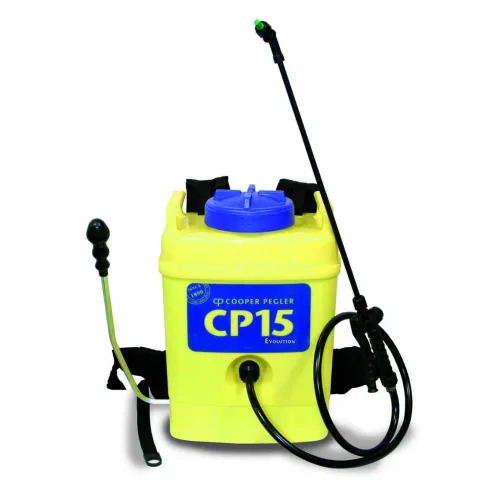
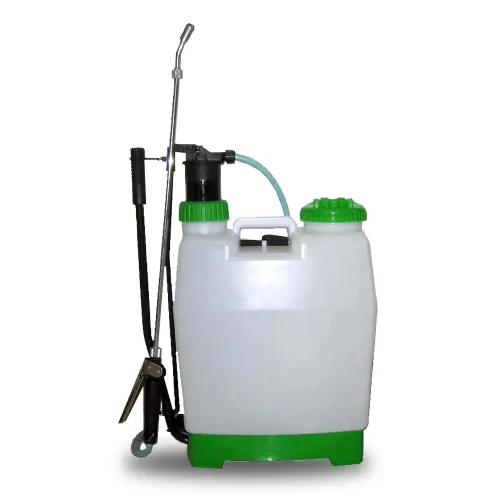
There are three categories of sprayer type:
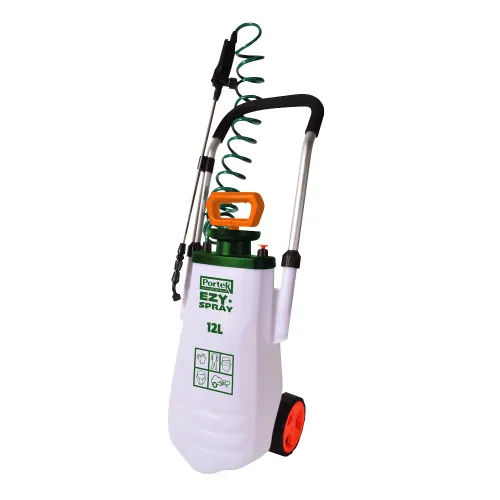
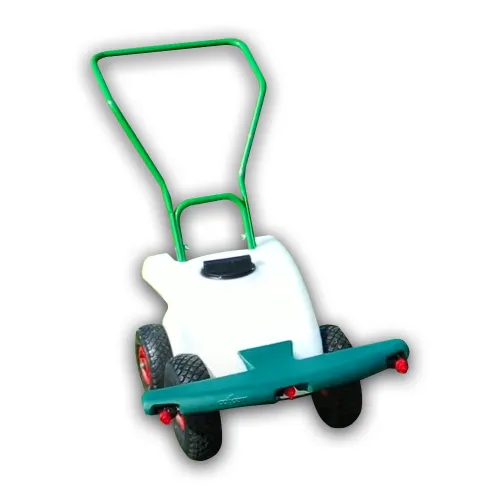
Handheld and wheeled sprayers for spot treatment:
- Best for spraying weeds in patio cracks, hard surface treatment, greenhouse plants or precision targeting for low volume spraying.
- Will generally cover areas up to 100m2.
- Lightweight and easy to store. Wheeled versions (like the Matabi Evolution 30) delivery capacity without the strain on your back.
- Manually powered or powered by small rechargeable batteries.
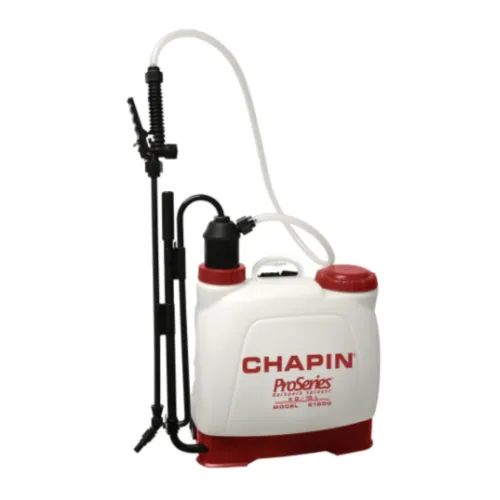
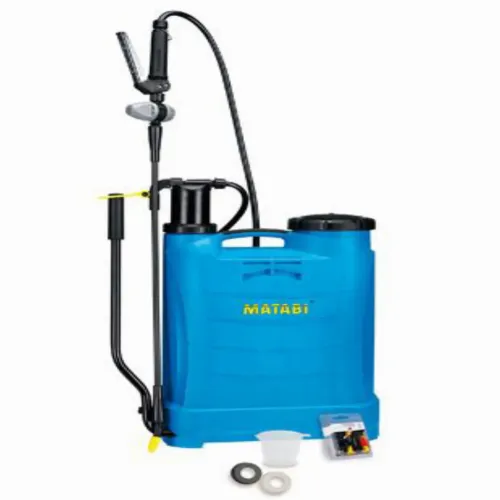
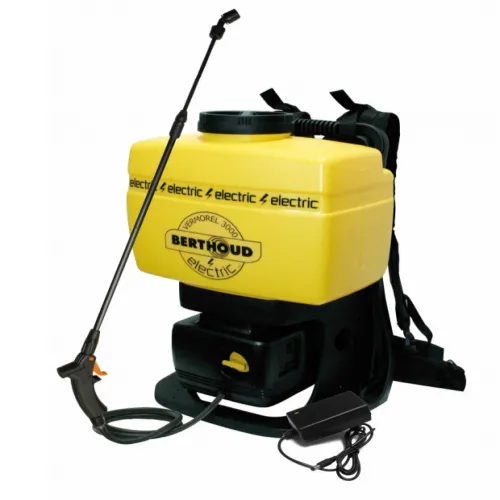
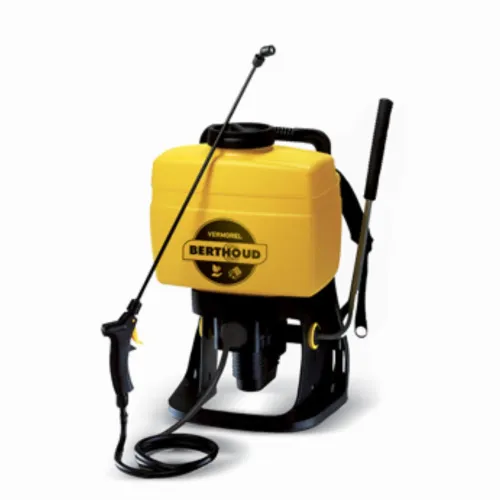
Knapsack or backpack sprayers for amenity and turf treatment:
- Best for lawns, fence lines, small to medium sized paddocks or areas with tricky access issues.
- Will generally cover areas of between 100m2 and 2000m2.
- Ergonomic designs help you to navigate uneven terrain or steep banks where vehicles cannot go.
- Lever action manual pumps or high-efficiency lithium-ion batteries help provide constant pressure.
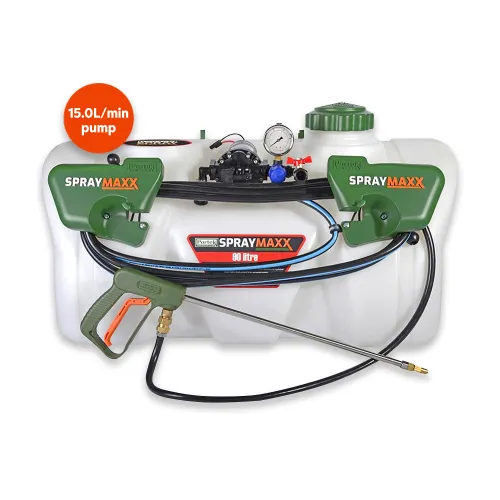
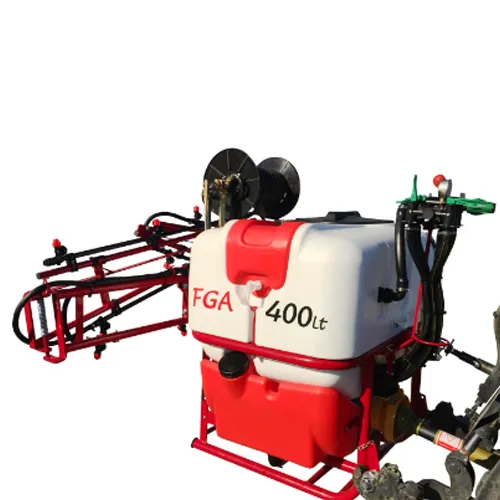
Boom sprayers for field and farm:
- Best for large equestrian centres, large pastures or commercial crops.
- Will generally cover 1 acre to 50+ acres.
- Folding booms and high-capacity tanks provide flexible, rapid coverage.
| Feature | Handheld & Wheeled Sprayers | Knapsack / Backpack Sprayers | Boom Sprayers (ATV) |
| Area to Cover | Small gardens, patios, or very localised spot-treating. | Medium gardens, small paddocks, or areas with restricted access. | Large-scale fields, expansive paddocks, and commercial turf. |
| Capacity | Typically, 1.5L to 12L (hand-held) or up to 30L-60L (wheeled). | Usually, 12L to 20L. | 60L to 1,200L+ (depending on ATV) |
| Power Source | Manual (pump-up) or small battery (e.g., 18V or 24V). | Manual (lever-action) or rechargeable Lithium-Ion battery. | Run from the 12v system on the ATV |
| Typical Use Case | Precision weeding in flower beds or cleaning garden furniture. | Applying herbicides/pesticides over a lawn or fence line. | Broad-acre crop care or blanket-spraying large pastures. |
| Portability | Highly portable; carried by hand or pushed on wheels. | Wearable; carried on the back with adjustable straps. |
Vehicle-mounted; requires an ATV, UTV, or tractor. If you don't have a dedicated tractor or ATV, consider a Skid Sprayer. It sits in your pickup truck bed, giving you the power of a boom sprayer with the flexibility of a long-range hose reel for trees and hard-to-reach fence lines. |
| Spray Width | Single nozzle (point-and-shoot). | Single nozzle, or 2, 3 or 4 nozzle boom attachment. | 1.5m to 15m folding booms with multiple nozzles. |
Buying Considerations
Nozzle Selection
The nozzle you use determines the ‘quality’ or distribution pattern of the spray.
If you’re spraying a contact insecticide, herbicide or fungicide, you will need to ensure your nozzle allows for a fine droplet size. This is to make sure the solution is retained on the leaves.
If you’re spraying a systemic herbicide or fungicide, you will want medium droplets, and if you are spraying onto soil or using a residual product, you will want coarse droplets.
There are a range of nozzles available that will operate within these variables and ensure you get the best from the spray process. In summary, these are:
- Deflector
- Standard flat fan
- Low drift flat fan
- Air inclusion
- Hollow cone
- Full cone
For most garden projects, you are likely to use a fan or cone nozzle. All our nozzles are compatible with our Matabi, Cooper Peglar, and Berthoud sprayers.
Refer to our Guide to Nozzle Selection for more information.
Manual Versus Electric
Manual sprayers are certainly more cost-effective, and do not require charging, so are always ready-to-go. Electric sprayers on the other hand provide consistent pressure, which means even, consistent chemical application. Choose electric when you have a large area to cover, where pumping might cause fatigue.
The key differences between electric sprayers usually come down to pressure regulation, battery chemistry and flow rate:
- Constant Pressure: High-end knapsack and boom sprayers use internal regulators to ensure the spray stays at a steady bar (e.g., 3 bar). This is vital because if the pressure drops, your spray pattern changes, and you under-apply the chemical.
- Variable Pressure: Some hand-held electric sprayers have a ‘decaying’ pressure - as the battery dies, the spray gets weaker. Professional ATV boom sprayers often feature a dial to manually adjust pressure depending on whether you are blanket spraying or spot treating.
Battery Technology
The type of battery affects the weight and the runtime of the sprayer.
- Lithium-Ion (Li-Ion): Found in modern knapsack sprayers. These are lightweight, charge quickly, and offer full power until the moment they die.
- Vehicle-powered (12V): ATV boom sprayers don't typically have their own battery; they clip onto the vehicle's battery. The difference here is the quality of the pump (measured in Litres Per Minute or LPM – which can vary widely from 3 to 15 LPM). Your choice will depend on the width of your boom and the speed you want to drive. Get in touch with our technical team for guidance relevant to your work type.
One of the main reasons sprayers fail, is because chemicals are left to sit in the pump. You can extend its life by following the triple-rinse rule: flush the system with clean water three times after each use. Never store a sprayer over winter with liquid in the pump, as freezing water will crack the housing.
This guide was written in collaboration with Ollie Wright.
Ollie Wright MBPR, FQA
Ollie Wright serves as the Technical Manager at Agrigem, where he oversees the integrity and accuracy of the company’s technical output. A recognised figure within the UK turf-growing sector, Ollie leads Agrigem’s technical response, ensuring that all guidance provided to retail and trade clients remains rigorous, compliant, and at the forefront of industry standards.
With a career built on a foundation of practical experience in farming and landscaping - including the successful management of his own firm - Ollie bridges the gap between theoretical science and field application. His extensive hands-on background is reinforced by industry credentials, including RHS Horticulture, amenity turf and hard surface BASIS, and FACTS qualifications. This unique combination of expertise allows him to deliver high-level strategic advice across diverse sectors regarding plant protection products and complex legislative requirements.
Article Notes:
Use plant protection products safely. Always read the label and product information before use. For label and safety information, refer to the manufacturer’s website.
Only certified users may apply professional plant protection products. Find out more about safe use of pesticides here.