Root Care

Bare roots are extremely sensitive to air and frost. So, before you pick up a spade, be sure to give your new plants the correct protection:
- Keep Roots Moist: If you’re planting immediately, store plants in a cool, sheltered place. Roots must be moist when they go in the ground, but don’t keep them sitting in water for more than 24 hours.
- If you need to keep them for a few days before planting, spray the roots, then keep them in strong plastic bags or fleece leaving the tops exposed, and store out of sun and wind.
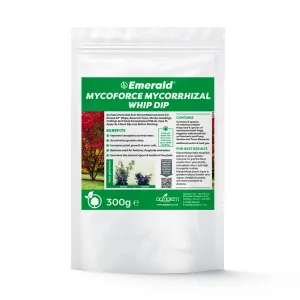
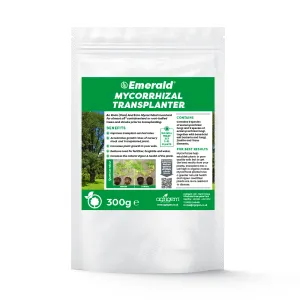
- Root Dipping: To give them the best start, use a mycorrhizal fungi treatment. This forms a symbiotic relationship with the roots, significantly increasing water and nutrient uptake.
Product Recommendations
Ground Preparation

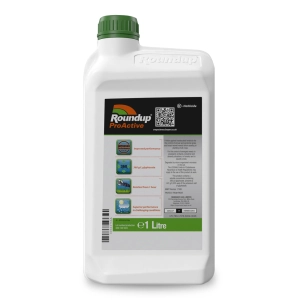
- Clear Vegetation: To effectively clear ground for a hedge planting run, use a total weedkiller to remove all vegetation from the target planting area. You can plant on the same day as using glyphosate because it becomes inactive upon contact with the soil. For queries relating to using a total weedkiller, please get in touch with our expert technical team.
- Spray Safely: Ensure you spray safely by following the label instructions and don’t apply during extreme drought or frost.
Product Recommendations
Tree Planting Using the Pit Method

Pit planting is preferred for larger bare root trees to ensure the root system is spread naturally and the soil is well-aerated.
- Dig the Pit: Dig a hole to around twice the width of the root system and to the same depth as the root ball. Use a fork to break up the soil on the sides and bottom of the pit to prevent ‘potting’, where roots struggle to penetrate compacted earth.
- Position the Tree: Place the tree in the centre. Ensure the root flare (where the roots meet the stem) is level with the soil surface. Planting too deep can cause stem rot.
- Backfilling: Mix your excavated soil with a specialist nutritional blend formulated to support early growth, then fill the hole with the mixture - holding the tree stem in position.
- Firming: Tread the soil in gently with your heel as you fill to remove air pockets, ensuring good root-to-soil contact.
Product Recommendations
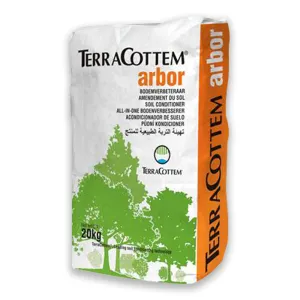
- Terracottem Arbor – a great fertiliser for pit planting trees, with added soil conditioners and water retention properties - formulated to improve survival rates.
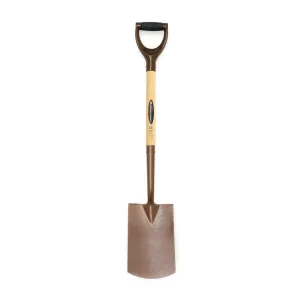
- Digging Spade
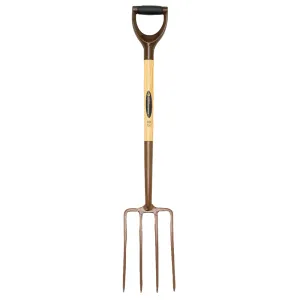
- Digging Fork
Hedge Planting Using the Notch or Slit Method

The ‘Notch’ or ‘Slit’ method is the fastest and most efficient way to plant smaller hedging whips (like Hawthorn or Beech).
- The ‘L’ or ‘T’ Cut: Push a spade into the ground to full depth. Make a second cut at a right angle to the first to create an ‘L’ shape.
- Levering: Use the spade to pry the soil up slightly, creating a gap.
- Insertion: Slide the bare root whip into the notch. Shake it slightly to ensure the roots are spread downward and not turned upward. Push the plant down deeper than it needs to be and then pull it back up until the root collar is level with the finished soil to make sure the roots are pointing down and not up. Do not be tempted to twist the plant as you are putting it in as this will twist the roots and they will use a lot of energy righting themselves instead of growing upwards.
- Nutrition: Apply a specialist starter fertiliser at the correct application rate.
- Closing: Remove the spade and use your heel to firmly press the turf back into place.
Product Recommendations
- Nutrigrow Starter Pro at a rate of 35g/m2
- Digging Spade
Protection and Support

- Stabilise: Young plants represent a buffet for rabbits and deer, and wind-rock can tear new delicate roots. For pit-planted trees, use a stake and a flexible tie. Position the stake on the side of the prevailing wind.
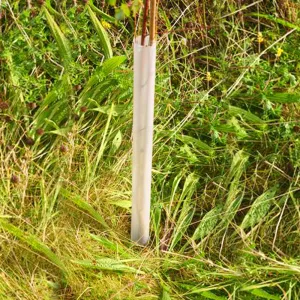
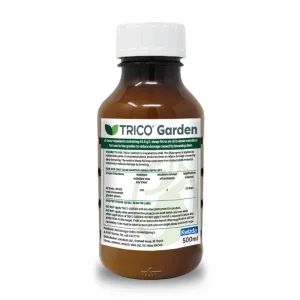
- Protect: Use plastic spirals or mesh guards for hedging to prevent bark stripping and consider a specialist deterrent, like Trico, to prevent damage from grazing deer.
Product Recommendations
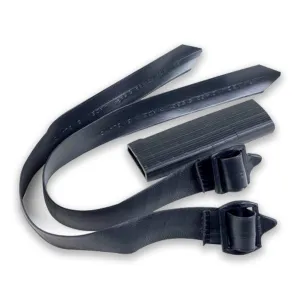
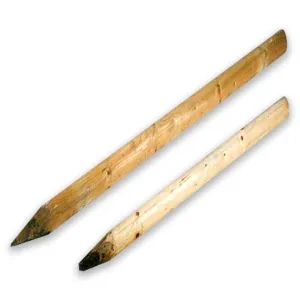
- Buckle Tree Ties and Tree Stakes.
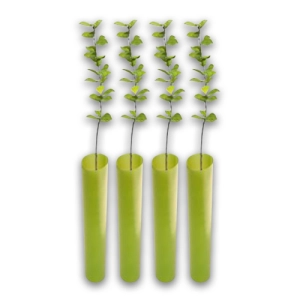
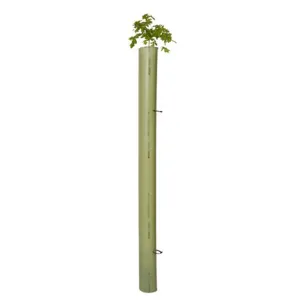
- Wrap Guards, Tubex Shelters, or other tree guards.
- To prevent deer damage, use Trico.
Post-Planting Care (Aftercare)

The first year is critical. Even low maintenance species need help getting established.
- Weed Suppression: Weeds compete for moisture and nutrients. Use mulch like landscape bark to keep a 1-meter diameter circle around the base clear.
- Watering: During dry spells in the first spring and summer, soak the base of the plants deeply once a week rather than light daily sprinkling. This is to promote deeper rooting. Watering little and often will keep the roots near the surface meaning they are not so good at getting water from deeper down in a dry period.
Product Recommendations
- Landscape bark
- Gem Granules – this residual herbicide can only be used from year 2 onwards
Always wear appropriate PPE (gloves and eye protection) when handling fertilisers or herbicide.
This guide was written in collaboration with Ollie Wright.
Ollie Wright MBPR, FQA
Ollie Wright serves as the Technical Manager at Agrigem, where he oversees the integrity and accuracy of the company’s technical output. A recognised figure within the UK turf-growing sector, Ollie leads Agrigem’s technical response, ensuring that all guidance provided to retail and trade clients remains rigorous, compliant, and at the forefront of industry standards.
With a career built on a foundation of practical experience in farming and landscaping - including the successful management of his own firm - Ollie bridges the gap between theoretical science and field application. His extensive hands-on background is reinforced by industry credentials, including RHS Horticulture, amenity turf and hard surface BASIS, and FACTS qualifications. This unique combination of expertise allows him to deliver high-level strategic advice across diverse sectors regarding plant protection products and complex legislative requirements.
Article Notes:
- Nutrigrow is a trademark of Agrigem Ltd.
- Emerald is a trademark of Agrigem Ltd.
- Spear & Jackson is a trademark of SNH Global.
- Apollo Frost Fleece is a trademark of Apollo Gardening Ltd.
- Gallup Biograde is a trademark of Barclay Chemicals Ltd. It contains 360g/L glyphosate.
- Terracottem Arbor is a trademark of TerraCottem BV. It contains cross-linked hydroabsorbent polymers, volcanic rock, fertilisers (generally 3% nitrogen, 1% phosphate and 3% potassium, growth precursors / biostimulants and humic acids.
- Trico is a trademark of Kwizda Agro GmbH.
- Flexidor residual herbicide is a trademark of Corteva Agriscience. It contains 500g/L isoxaben.
- Use plant protection products safely. Always read the label and product information before use. For label and safety information, refer to the manufacturer’s website.
- Only certified users may apply professional plant protection products. Find out more about safe use of pesticides here.